


Crypto assets have emerged as a distinct asset class, attracting growing interest from institutional investors, businesses, and retail participants. As the digital asset ecosystem continues to evolve, traders are exploring different ways to participate in the market and respond to price movements. Unlike long-term investing, which typically focuses on an asset’s underlying fundamentals and growth potential over time, crypto trading generally involves buying and selling assets over shorter time frames to capitalise on market movements. Traders may use a combination of technical analysis, market trends, trading indicators, and risk management strategies to inform their decisions. There are several approaches to crypto trading, each suited to different trading styles, time horizons, and levels of experience. This article provides a comprehensive overview of the most common crypto trading methods, explaining how they work and highlighting the key factors to consider when choosing an approach.
What is Crypto Trading and How Does it Work?
Crypto trading involves buying and selling crypto assets to potentially benefit from changes in their market prices. Traders analyse price movements, market trends, trading volumes, and other indicators to identify potential entry and exit points. Depending on their approach, they may hold positions for a few minutes, several hours, or multiple days. Crypto markets operate 24/7, allowing traders to respond to market developments across different time zones.
Crypto trading typically takes place through an exchange that facilitates the buying and selling of digital assets. Traders can use market orders to execute transactions at the best available prices or limit orders to specify the prices at which they wish to buy or sell. Their decisions may be guided by technical analysis, fundamental research, or a combination of both. However, crypto prices can change rapidly, and no trading method guarantees profits. Understanding market mechanics and establishing a clear plan are essential starting points.
Also Read: 12 Years of ZebPay: Leading Bitcoin Adoption Through Education & Trust
How Crypto Trading Differs From Long-Term Investing
Crypto trading and long-term investing differ primarily in their objectives, time horizons, and decision-making approaches. Trading generally focuses on shorter-term price movements, while long-term investing involves holding crypto assets over an extended period based on their potential growth and underlying fundamentals.
- Time horizon: Traders may hold positions for minutes, hours, or days, whereas long-term investors may hold assets for months or years.
- Decision-making: Traders often rely on price charts, technical indicators, trading volumes, and short-term market developments. Long-term investors may place greater emphasis on a project’s utility, adoption, development, and long-term prospects.
- Frequency of transactions: Trading typically involves more frequent buying and selling, while long-term investing generally requires fewer transactions.
- Costs and effort: Frequent trading can result in higher cumulative transaction fees and requires regular market monitoring. Long-term investing may involve less day-to-day activity, although periodic portfolio reviews remain important.
- Risk considerations: Both approaches carry market risk. Short-term traders may face rapid price changes and repeated transaction costs, while long-term investors remain exposed to extended market downturns and changes in a project’s fundamentals.
Neither approach is universally better. The choice depends on an individual’s financial objectives, risk tolerance, available time, and understanding of crypto markets.
What You Need Before You Start Trading Crypto
Before placing your first trade, it is important to understand the basic requirements for accessing a crypto exchange and managing transactions responsibly. A structured approach can make crypto trading for beginners easier to navigate and help reduce avoidable mistakes.
- A verified exchange account: Choose a platform that supports your preferred crypto assets and trading features. Complete the required identity verification and review its regulatory status.
- A secure account setup: Use a strong, unique password and enable multi-factor authentication wherever available. Be cautious of suspicious links, impersonation attempts, and unsolicited investment offers.
- Funds you can afford to risk: Decide on a trading budget based on your financial circumstances. Avoid using borrowed money or funds needed for essential expenses.
- Basic market knowledge: Learn how prices, trading pairs, order types, fees, and liquidity work before committing significant funds.
- A trading plan: Define your objectives, preferred time frame, entry and exit conditions, and acceptable level of loss before executing a trade.
- A risk management approach: Determine how much capital to allocate to individual trades and how you will respond if the market moves against your position.
Starting with small positions and familiarising yourself with the exchange interface can help you gain practical experience without taking on unnecessary exposure.
Choosing the Right Exchange for Your Trading Style
The right crypto exchange depends on the assets you want to trade, your experience, and the features required for your preferred strategy. Beginners may prioritise a straightforward interface, convenient INR deposits and withdrawals, accessible customer support, and transparent fees. More experienced traders may look for advanced charting tools, multiple order types, detailed market data, and additional trading products.
Security and regulatory compliance should remain central to the decision. In India, users can check whether a platform is registered with the Financial Intelligence Unit-India (FIU-IND), where applicable, and review its security practices, withdrawal policies, supported trading pairs, and fee structure. It is also worth comparing liquidity and the difference between buying and selling prices, as these can affect the cost of executing a trade. Ultimately, an exchange should support your trading requirements without encouraging you to take on more risk than you can manage. Review the platform’s terms and features before depositing funds.vestors over a long period.
Also Read: Crypto Investing vs. Crypto Trading
Key Concepts Every Crypto Trader Must Know
Understanding basic trading terminology is essential before developing a crypto trading strategy. Concepts such as order types, liquidity, price charts, and market trends help traders interpret market conditions and execute transactions more effectively. These fundamentals also provide a foundation for learning technical analysis and evaluating potential trading opportunities.
Understanding Market Orders, Limit Orders, and Stop-Loss
Order types determine how and when a trade is executed. Choosing the appropriate order can affect the price you receive, the speed of execution, and the level of control you have over a transaction:
- Market order: An instruction to buy or sell immediately at the best available market prices. It prioritises execution speed, but the final price may differ from the price displayed when the order is placed, particularly in fast-moving or less liquid markets.
- Limit order: An instruction to buy or sell at a specified price or better. A buy limit order sets the maximum price you are willing to pay, while a sell limit order sets the minimum price you are willing to accept. Execution is not guaranteed if the market does not reach the specified price or sufficient orders are unavailable.
- Stop-loss: A risk management instruction designed to trigger an exit when the market reaches a specified level. Depending on the exchange, it may generate a market order or a limit order. A stop-loss can help manage potential losses, but execution at the intended price is not guaranteed, especially during sharp price movements.
For example, a trader buying Bitcoin at ₹90 lakh may set a stop-loss trigger at ₹87 lakh to establish a planned exit if the price declines. The actual execution price can differ from the trigger price, depending on the order type and market conditions. Traders should understand the exchange’s specific order mechanics before relying on these tools.
What is Liquidity and Why Does it Matter for Traders?
Liquidity refers to how easily a crypto asset can be bought or sold without significantly affecting its market price. Highly liquid markets generally have more active buyers and sellers, allowing orders to be executed more efficiently. Lower-liquidity markets may have fewer participants and wider differences between the highest buying price and the lowest selling price.
Liquidity matters because it influences execution costs and the ability to enter or exit a position. A large market order in a low-liquidity trading pair may consume several price levels in the order book, resulting in a less favourable average execution price. This is known as slippage.
Traders can assess liquidity by examining trading volume, order book depth, and the bid-ask spread. However, reported volume alone does not always provide a complete picture of available liquidity. Checking the order book and expected execution price before placing a large order can help traders make more informed decisions.
How to Read a Crypto Price Chart
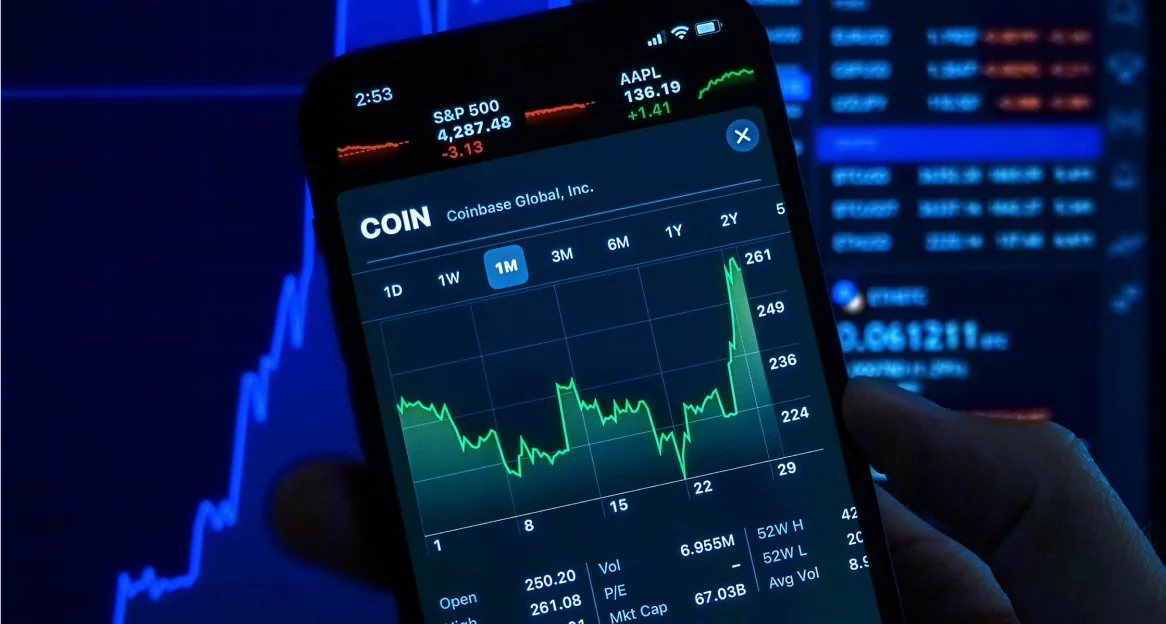
A crypto price chart displays how an asset’s price changes over time. Traders use charts to identify trends, support and resistance levels, potential breakout points, and areas where buying or selling pressure may be increasing. Understanding these elements can help traders interpret market behaviour rather than relying solely on price predictions or market commentary.
The first step is to select a suitable time frame. Shorter time frames, such as five-minute or 15-minute charts, show more immediate price movements, while daily and weekly charts provide a broader view of market direction. A price chart can also display trading volume, which indicates how much of an asset has been traded during a given period. Traders commonly examine three elements:
- Trend: The general direction of price movement, which may be upward, downward, or sideways.
- Support and resistance: Price areas where buying or selling pressure has historically influenced market movements. These are zones rather than guaranteed reversal points.
- Trading volume: The amount of an asset traded over a given period, which can help traders assess participation behind a price move.
Charts provide useful information, but they cannot predict future prices with certainty. It is important to combine chart observations with risk management and other relevant market information.
Also Read: The State of Crypto in India: H1 2026 Review & H2 2026 Outlook
Candlestick Patterns Every Beginner Should Recognise
Candlestick charts display an asset’s opening, highest, lowest, and closing prices during a selected period. Each candle represents a specific time interval, with its body showing the opening and closing prices and its wicks indicating the highest and lowest prices reached. Some common candlestick patterns include:
- Doji: Forms when the opening and closing prices are close together, indicating indecision between buyers and sellers.
- Hammer: Has a small body and a long lower wick. It may indicate a potential bullish reversal after a decline, particularly when supported by subsequent price action.
- Shooting star: Has a small body and a long upper wick. It may signal weakening buying pressure after an advance.
- Bullish engulfing: Occurs when a bullish candle’s body engulfs the previous bearish candle’s body, potentially indicating a shift towards buying pressure.
- Bearish engulfing: Occurs when a bearish candle’s body engulfs the previous bullish candle’s body, potentially indicating increasing selling pressure.
Candlestick patterns are not reliable signals in isolation. Their significance depends on the surrounding trend, trading volume, support and resistance levels, and confirmation from subsequent price action.
Technical Analysis for Crypto Trading
Technical analysis involves studying historical price movements, trading volumes, and chart patterns to identify potential trading opportunities. It is widely used by crypto traders to assess market trends, evaluate momentum, and plan entry and exit points. Rather than determining the underlying value of a crypto asset, technical analysis focuses on how the market has behaved and what current price patterns may suggest.
Traders use a range of indicators to interpret market conditions. These tools can help identify whether an asset is trending, gaining momentum, or approaching a potential reversal. However, no indicator provides consistently accurate predictions, particularly in a market that operates continuously and can respond quickly to news, liquidity changes, and broader financial developments.
Key Indicators Used by Crypto Traders
Technical indicators apply mathematical calculations to price and volume data to help traders interpret market behaviour. Each indicator serves a different purpose, and the choice depends on the trading strategy, time frame, and market conditions. Commonly used indicators include:
- Relative Strength Index (RSI): Measures the speed and magnitude of recent price changes to assess momentum and potential overbought or oversold conditions.
- Moving Average Convergence Divergence (MACD): Helps identify changes in momentum and potential shifts in trend direction.
- Bollinger Bands: Use a moving average and upper and lower bands to illustrate price movement relative to recent volatility.
- Moving Averages (MA): Smooth out price data over a specified period to help identify the prevailing trend.
- Volume indicators: Help traders assess the level of market participation behind a price movement.
Indicators are most useful when interpreted alongside price action and broader market conditions. Relying on a single indicator can produce misleading signals, especially during periods of low liquidity or sudden market volatility.
Crypto Trading Methods
While the list of trading strategies is endless, we have listed key techniques used by traders. These strategies should help one decide the risk-reward dynamics of trading.
Crypto Day Trading
Intra-day trading involves buying and selling an asset on the same day. It’s purely dependent on the buy-sell market forces which impact the price on that particular day. Retail investors benefit during intra-day trading by shadowing institutional traders whose positions have an impact on the price of the asset. For example, when a large institutional investor takes a position in a coin like Bitcoin or Ether, the
Also Read: How to Pick Crypto for Day Trading?
Swing Trading in Crypto
Swing trading is when the asset is bought and usually sold after a week or a month depending on the price movements. Unlike Intra-Day trading, swing trading requires price monitoring for a longer period. Swing trading is also a combination of fundamental and technical analysis of the asset. Example: The Ethereum Merge event which recently took place saw a lot of traders using the swing trading strategy to enter and exit the market. Historical analysis of the asset is also key when Swing trading is deployed.
Arbitrage in Crypto
Arbitrage is a strategy used by traders to buy and sell assets over multiple exchanges. For example, if Bitcoin is trading at $17,500 on one exchange and $17,700 on another exchange, the trader buys the asset on one exchange and transfers the assets to the other exchange and sells it there, thereby making a profit. In the case of Arbitrage, the trader must pay commissions to each of these exchanges.
Crypto Futures Trading
Future trading involves getting into an agreement to buy an asset at some future date for a specific price. The contract binds the agreement. Future trading involves having a knack for making good predictions about price movements.
High-Frequency Trading
It involves trading using Algorithmic methods which scan the markets based on pre-defined conditions. High-Frequency trading enables bots to place orders on your behalf when conditions are met. It requires a trader to be well versed in programming and financial modelling. It is often seen as a strategy more suitable for experienced market traders.
Also Read: Stablecoins in H1 2026: Regulation, Payments, and Market Growth
Range Trading in Crypto
Range trading involves price monitoring in a certain range. Traders should be well aware of concepts such as Support and Resistance lines to profit through range trading. Support and Resistance points are technical indicators which are indicative of trend reversals. Historical backdating is also a key to making accurate inferences from technical charts. For example, if Ether is trading in a range of $900 to $1,100, it is an opportunity for a trader to buy low and sell high within this range.
Scalping in Crypto
Crypto Scalping involves making gains over several trades over a short period. These gains could be less on a per-trade basis, but when all the transactions are consolidated, the gains result in a sizable amount. Since it involves placing orders at a high speed, traders prefer highly liquid assets. There should be a market which is ready to buy the orders at any given point in time to ensure successful scalping. Traders should have a good understanding of volumes, price points, news and any other technical indicators to capitalize on scalping opportunities.
Trend-Based Trading in Crypto
Trend-based trading involves taking market signals and developments on a macroeconomic level to anticipate price appreciation. For example, if a new metaverse token based on a game is launched and if the game witnesses a surge of downloads and an increasing user base over a period, then the price of the coin could appreciate. Trend-based trading involves a trader being vigilant of everyday happenings in the market.
Also Read: India’s Crypto Investor Behaviour in H1 2026: HODL vs. Trading Trends
Advantages and Disadvantages of Crypto Trading
| Advantages | Disadvantages |
| Volatile market opportunities can help traders make profits | Understanding the market takes time and effort |
| Trading is open 24×7, unlike other markets | Users should ensure that they are well aware of all the security risks and trade on secure platforms |
| Algorithmic methods can eliminate manual interventions | Several techniques often confuse newbies on what to follow |
| Instant settlements | Few low-volume tokens can have liquidity issues |
| Decentralised exchanges enable peer-to-peer transactions | Lack of resource material to guide traders |
Crypto Trading Strategies for Beginners vs. Advanced Traders
Crypto trading strategies vary according to experience, available time, market knowledge, and risk tolerance. Beginners often benefit from straightforward approaches that are easier to understand, test, and monitor. More experienced traders may use multiple time frames, advanced technical indicators, derivatives, or automated systems to implement more complex strategies.
Regardless of experience, a trading strategy should define the conditions for entering and exiting a position, the amount of capital at risk, and the circumstances under which a trade should be avoided. A more complicated strategy is not necessarily more effective. Its suitability depends on how well it is understood, tested, and applied under different market conditions.
| Strategy | How it works | General considerations |
|---|---|---|
| Spot trading | Involves buying and selling crypto assets directly without borrowing funds to establish the position. | A useful starting point for understanding order types, market movements, and transaction costs. Asset prices can still decline significantly. |
| Dollar-cost averaging (DCA) | Involves purchasing a predetermined amount of an asset at regular intervals. | Reduces the need to time each purchase, but does not guarantee profits or protect against a prolonged decline. |
| Swing trading | Seeks to benefit from price movements over several days or weeks. | Requires trend analysis, planned entry and exit levels, and the ability to manage positions over time. |
| Day trading | Involves opening and closing positions within the same trading day. | Requires frequent monitoring, a clear process, and careful control of transaction costs and risk. |
| Scalping | Attempts to capture small price movements through frequent trades. | Demands precise execution, strong liquidity, and close attention to fees and slippage. |
| Arbitrage | Seeks to benefit from price differences for the same asset across markets or trading venues. | Price differences may disappear quickly, and fees, transfer delays, withdrawal limits, and execution risks can eliminate potential gains. |
| Algorithmic trading | Uses programmed rules to execute or manage trades automatically. | Requires technical knowledge, testing, monitoring, and safeguards against software or connectivity failures. |
Conclusion
Crypto trading offers opportunities to benefit from market movements, but it also involves risks, including price fluctuations, liquidity constraints, and unexpected market developments. Navigating these challenges requires traders to have a clear strategy, a defined risk management approach, and contingency plans for changing market conditions. Understanding market trends, conducting thorough research, setting realistic expectations, and avoiding emotionally driven decisions can help traders make more informed choices. It is equally important to determine suitable entry and exit points, establish stop-loss levels where apprke any other market. Traders should ensure that they are armed with strategies and contingency plans. A well-researched approach is a key to performing better than the market.
In the grand scheme of things, ZebPay blogs are here to provide you with crypto wisdom. Get started today and join 6 million+ registered users to explore endless features on ZebPay!
FAQs
What is the safest crypto trading strategy for beginners?
Generally, range trading and swing trading are considered more manageable for beginners.
Can I start crypto trading with a small amount?
Yes. Most exchanges allow you to start with relatively small amounts. However, strategies like arbitrage and high-frequency trading become less effective at small scales due to transaction fees eating into margins.
Do I need to understand technical analysis to trade crypto?
It is important to have an understanding of the most active trading strategies like range trading, swing trading, and scalping. Plus, technical indicators like support and resistance levels, volume, and price charts are considered crucial for active trading.
What is the difference between crypto trading and investing?
Crypto trading focuses on short-term price movements, while investing involves holding crypto assets for longer periods based on their growth potential and fundamentals. Both approaches carry risks and suit different financial goals.
What is the difference between day trading and swing trading in crypto?
Day trading involves opening and closing positions within the same day, while swing trading aims to benefit from price movements over several days or weeks. Day trading generally requires more frequent market monitoring.