

Bitcoin and Ethereum illustrate how dramatically crypto markets can evolve over time. Assets that once traded below a dollar are now priced near $92,511.35 and $3,156.64, reflecting how scale, adoption, and market maturity can reshape valuations.
But price alone is a poor indicator of future potential. In a market crowded with thousands of tokens, identifying meaningful opportunities in 2026 requires looking beyond affordability and focusing on substance—technology, real-world relevance, and long-term vision.
With that lens, we’ve shortlisted a group of crypto assets currently trading below $1 in 2026 that show signs of durability and forward momentum, offering a starting point for those exploring value-led opportunities in the next phase of the crypto market.
Also Read: What is the Bitcoin Genesis Block?
List of the 10 Best Cryptos Under $1
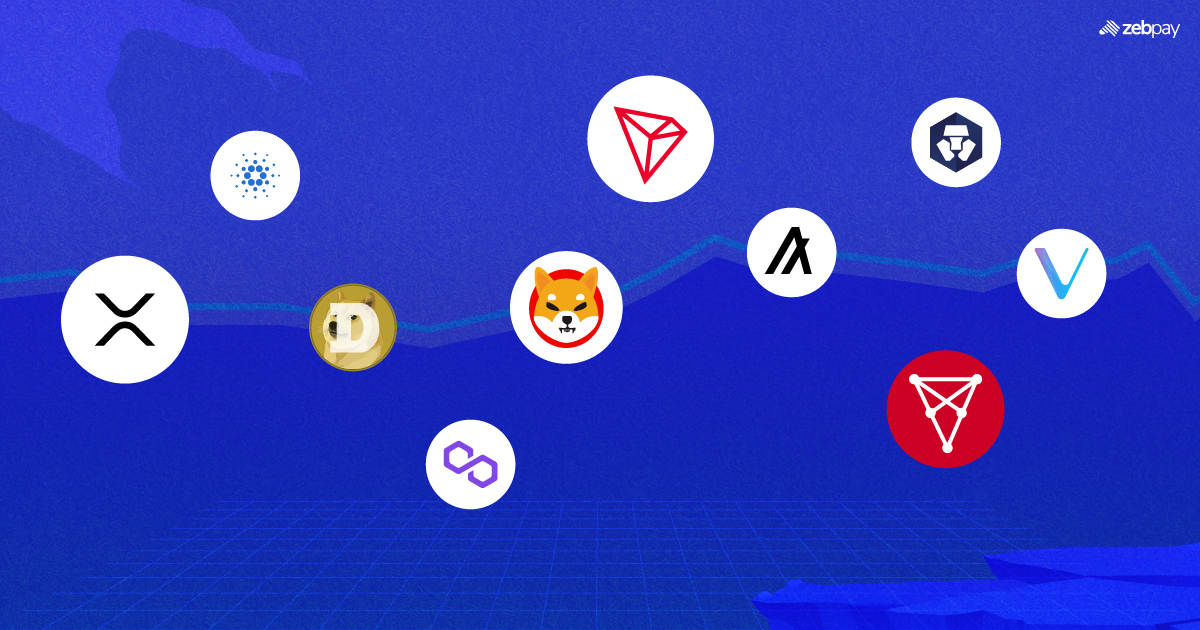
These coins are sorted by market capitalization. Here are the most affordable crypto assets to buy now:
Cardano (ADA)
Cardano (ADA), launched in 2017, set out to drive global change through blockchain innovation. Unlike many other crypto assets of its time, it adopted a proof-of-stake consensus mechanism early on, quickly rising to become one of the most prominent platforms using this model.
What sets Cardano apart is its research-driven approach. Every new feature undergoes rigorous academic scrutiny and peer review before implementation, ensuring a high level of security and operational efficiency.
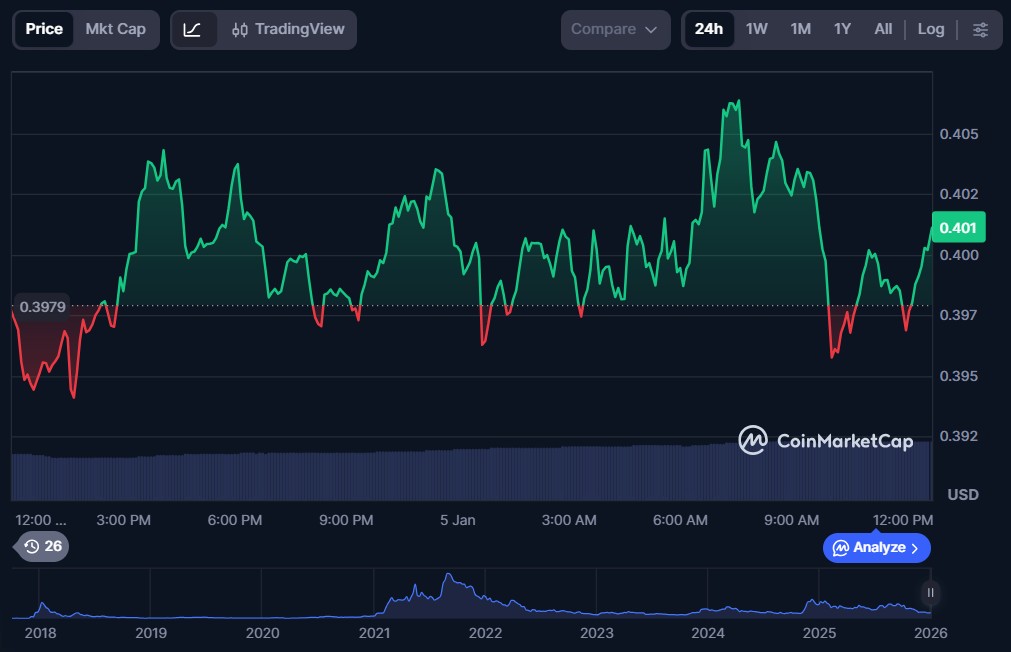
As of now, ADA carries a market capitalization of $14.41 billion, is trading at $0.4010 per token, and has recorded a 24-hour trading volume of $689.03 million.
Dogecoin (DOGE)
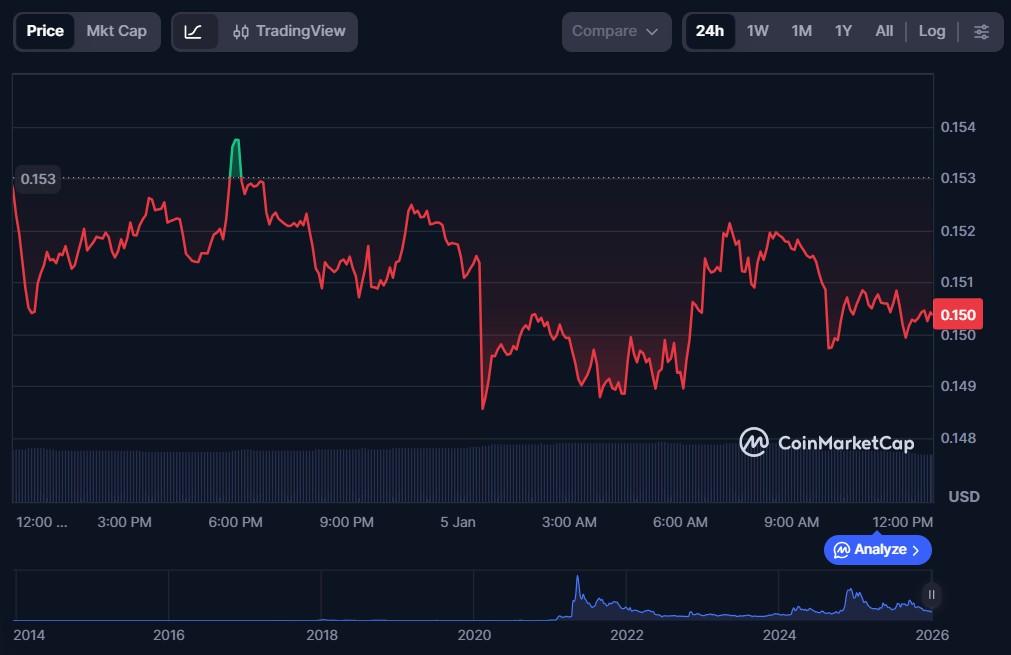
Originally forked from Litecoin in 2013, Dogecoin was created as a fun and approachable crypto asset aimed at reaching a broader audience than Bitcoin. Inspired by the viral “doge” meme, it features a Shiba Inu dog as its logo, giving it a distinctly playful identity.
Dogecoin is considered a meme coin, meaning it holds limited real-world utility. Its popularity stems largely from internet culture and community-driven support. Despite its humorous origins, the coin has built a loyal and enthusiastic following, helping it remain relevant over time.
At the time of writing, DOGE is trading at $0.1503, with a market capitalization of $25.29 billion and a 24-hour trading volume of $1.84 billion.
Polygon (POL)
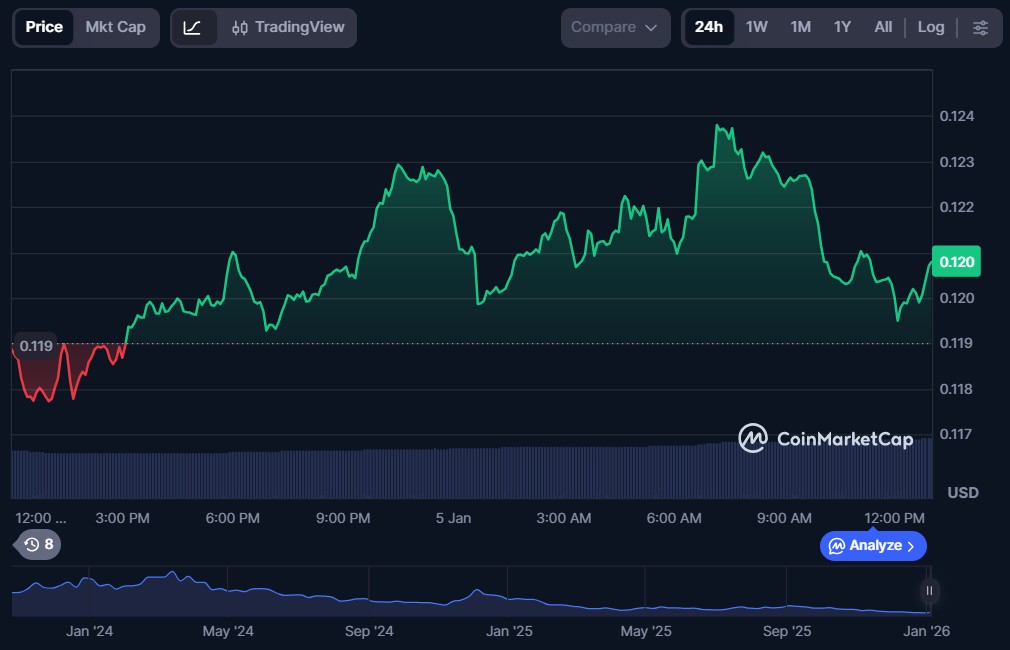
Polygon (previously MATIC) is a layer-2 scaling solution designed to enhance the Ethereum network. Simply put, it operates alongside Ethereum to reduce issues like high transaction fees and network congestion.
It achieves this by creating multiple sidechains—parallel blockchains that support the main Ethereum chain. Using advanced technologies like optimistic rollups and zkRollups, Polygon bundles transactions before sending them to Ethereum, enabling it to handle over 65,000 transactions per second, far surpassing Ethereum’s average of 15.
POL is currently trading at $0.1204, with a $1.27 billion market capitalization and a $73.23 million 24-hour trading volume.
Shiba Inu (SHIB)
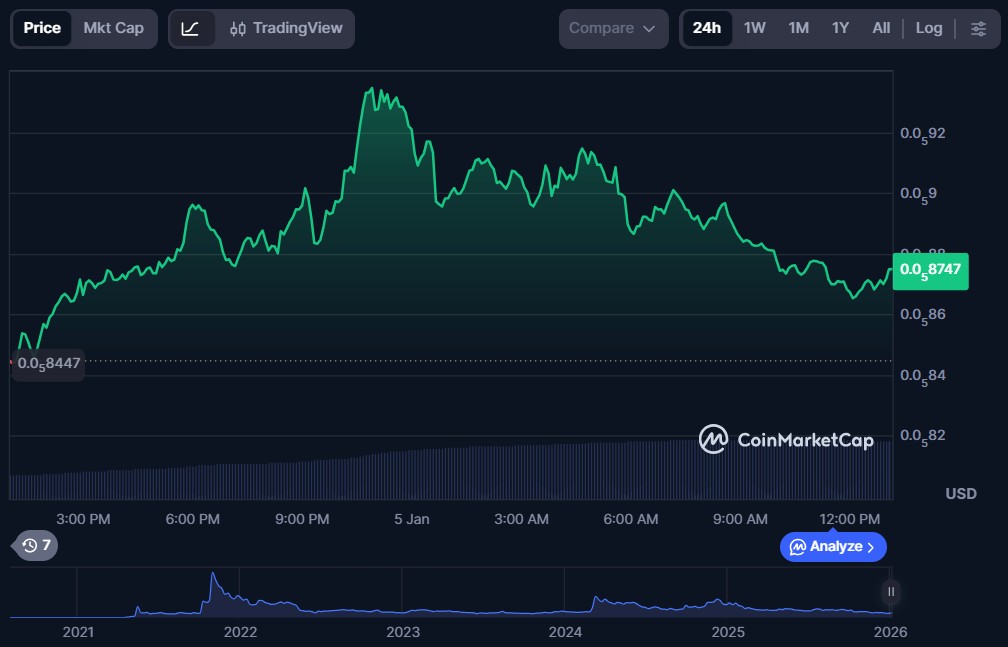
Shiba Inu (SHIB), inspired by Dogecoin, is another well-known memecoin that rose to fame due to its playful concept and high-profile endorsements. While Dogecoin playfully mirrors Bitcoin, SHIB positions itself as Ethereum’s counterpart. Public support from figures like Vitalik Buterin and Elon Musk has helped drive its popularity and price surges.
The success of SHIB has sparked a wave of similar meme projects, including Shibalana and Shiba Fantom—variations built on the Solana and Fantom blockchains. Thanks to its massive community and unique branding, Shiba Inu continues to stand out in the crowded crypto space.
With a $5.15 billion market capitalization and $321.80 million in 24-hour trading volume, SHIB is currently priced at $0.000008731.
TRON (TRX)
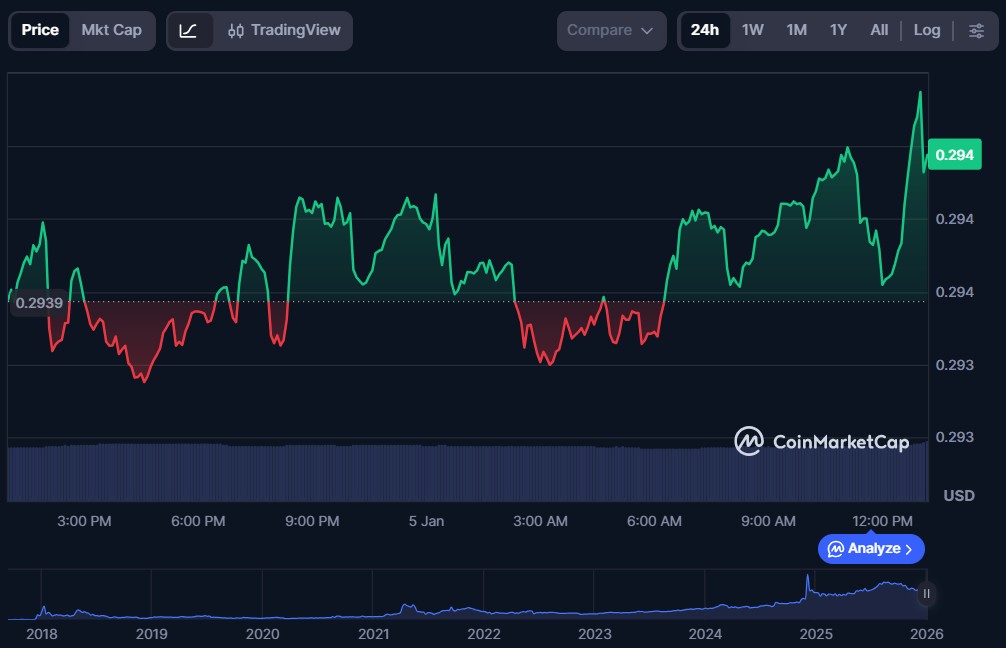
Tron is a decentralised blockchain platform that allows developers to build smart contracts and decentralised applications (dApps). It aims to overcome some of Ethereum’s key limitations, particularly scalability issues and high transaction fees.
The network uses a delegated proof-of-stake (DPoS) mechanism, offering an efficient alternative to the traditional systems used by Bitcoin and Ethereum. This model enables more users to participate in block validation and earn rewards, making the network more inclusive and energy-efficient.
With a 24-hour trading volume of $541.20 million and a market capitalization of $27.91 billion, TRX is trading at $0.2948 per token.
Algorand (ALGO)
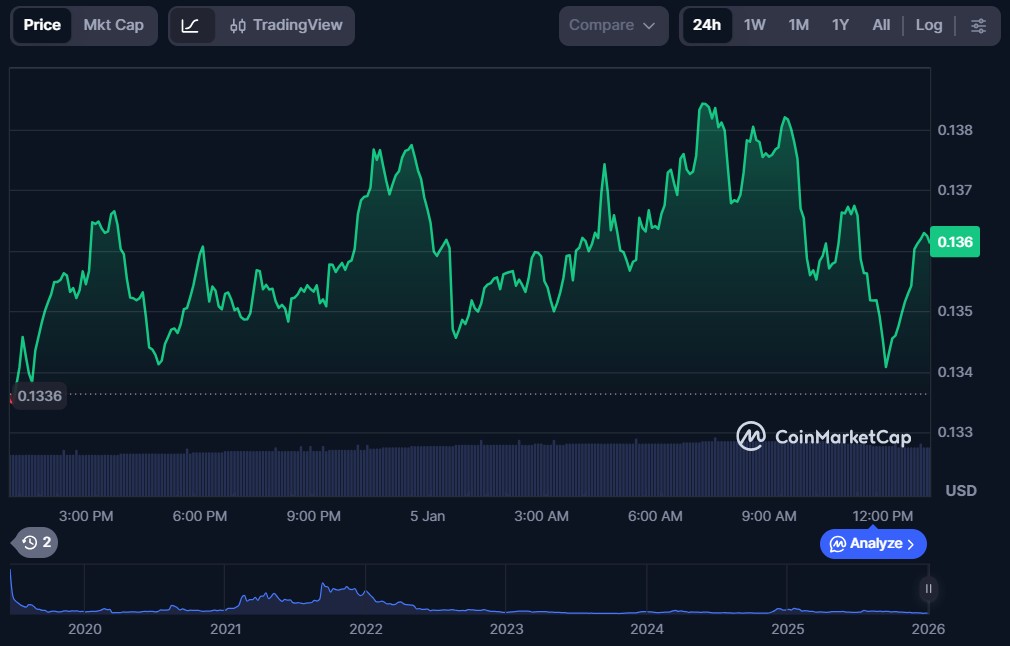
While many blockchains focus on efficiency and security, Algorand stands out by branding itself as “the greenest blockchain.” Its commitment to sustainability sets it apart in a space often criticised for high energy consumption.
This is made possible through its pure proof-of-stake protocol consensus mechanism. Unlike Bitcoin’s energy-intensive proof-of-work model, PPoS eliminates the need for complex computations. It also promotes fairness by allowing any user with just 1 ALGO token staked to participate in transaction validation.
With a market capitalization of $1.20 billion and $46.58 million in 24-hour trading volume, ALGO is priced at $0.1361.
Read more: What is Algorand
Cronos (CRO)
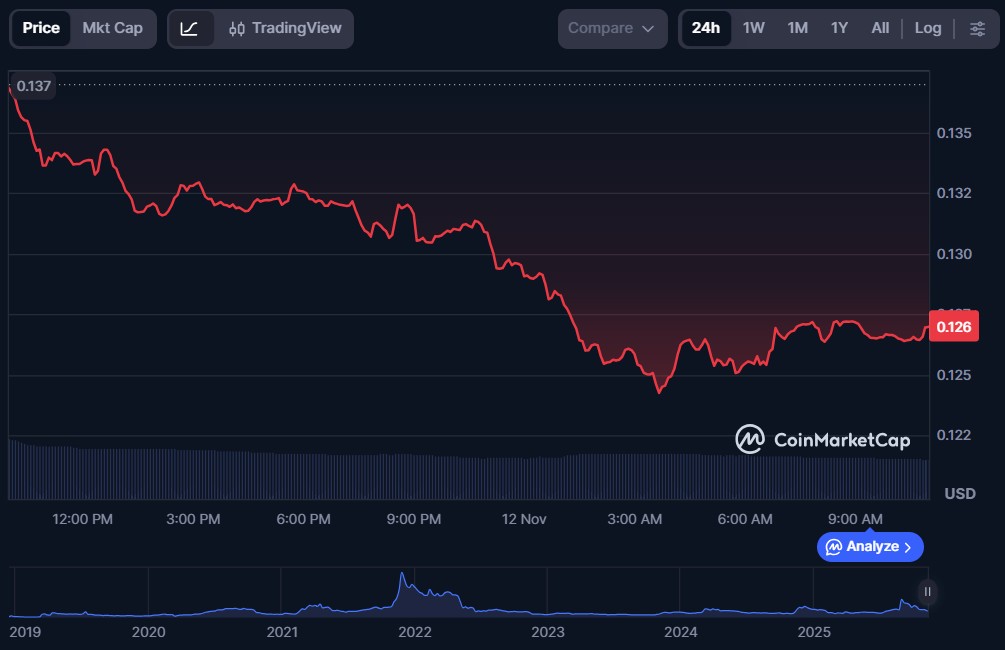
Cronos (CRO) is the native crypto asset of Crypto.com, a popular platform offering trading and financial services. Built as an open-source blockchain, Cronos primarily enhances the utility of Crypto.com’s ecosystem for its users.
CRO holders can enjoy various benefits, such as cashback on payments and gift cards. To expand its ecosystem, Crypto.com also introduced Cronos Chain—an Ethereum-compatible blockchain that operates alongside the main network.
Currently valued at $0.1054, CRO’s market capitalization reaches $4.06 billion, while its trading activity over the past 24 hours totals $26.91 million.
VeChain (VET)
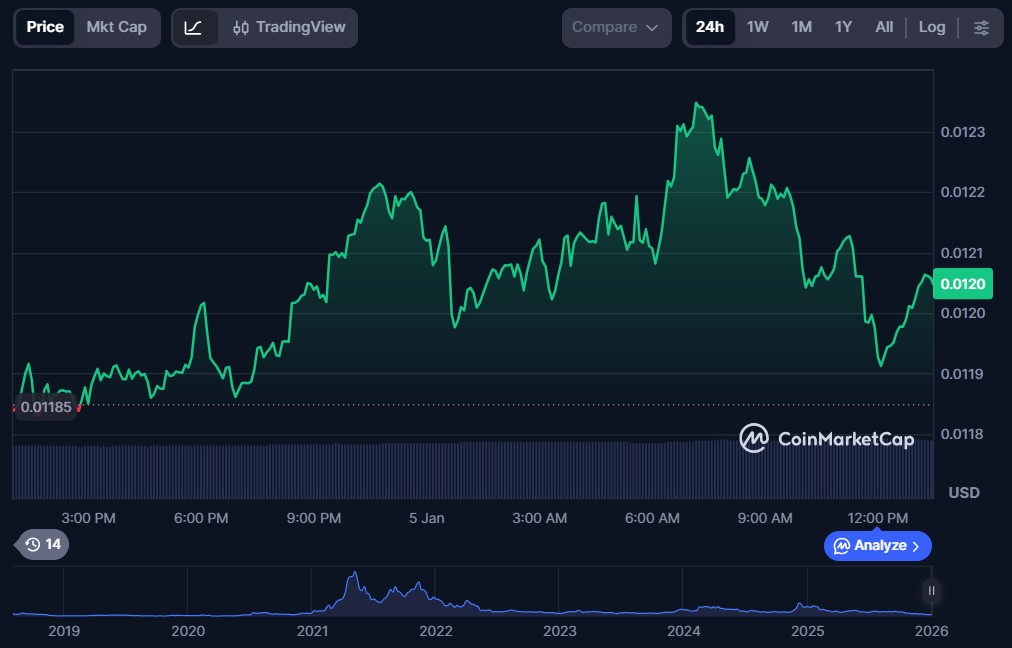
VeChain sets itself apart from most blockchain platforms by focusing on enterprise solutions rather than just payments. It is especially known for its supply chain management system, which integrates blockchain technology with the Internet of Things to provide real-time, transparent tracking of goods and data.
The platform operates on a dual-token model using VET and VTHO. VET is used to transfer value between users, while VTHO covers the transaction fees, or “gas.” This separation helps maintain predictable and stable costs for users over time.
With $23.25 million in 24-hour trading volume and a market cap of $1.03 billion, VET is priced at $0.01204.
Chiliz (CHZ)
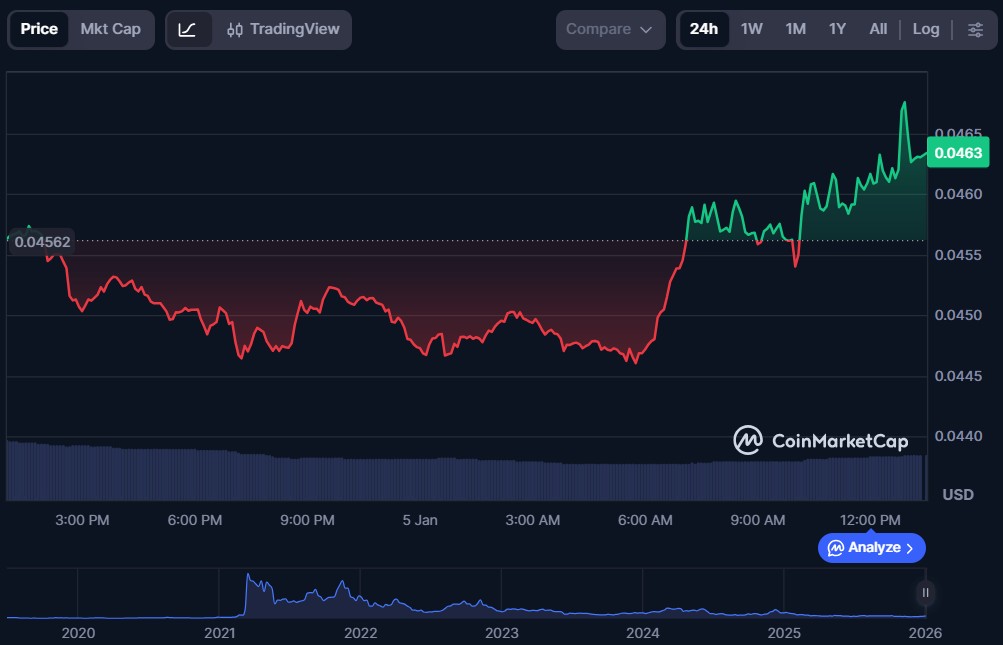
Sports teams often create a strong emotional connection with their fans. Chiliz builds on this bond by giving fans a direct voice in how their favourite teams and brands operate. Through its sports-focused platform, Socios, Chiliz enables clubs to generate new revenue while offering fans unique digital assets known as fan tokens.
Each team can issue a limited number of these tokens, which are purchased using CHZ, the platform’s native cryptocurrency. Holding these tokens allows fans to participate in key decisions—ranging from jersey designs to matchday lineups—deepening their involvement with the team.
Currently valued at $0.04630, CHZ holds a market capitalization of $472.55 million and has seen $76.42 million in trading activity over the past 24 hours.
Basic Attention Token (BAT)
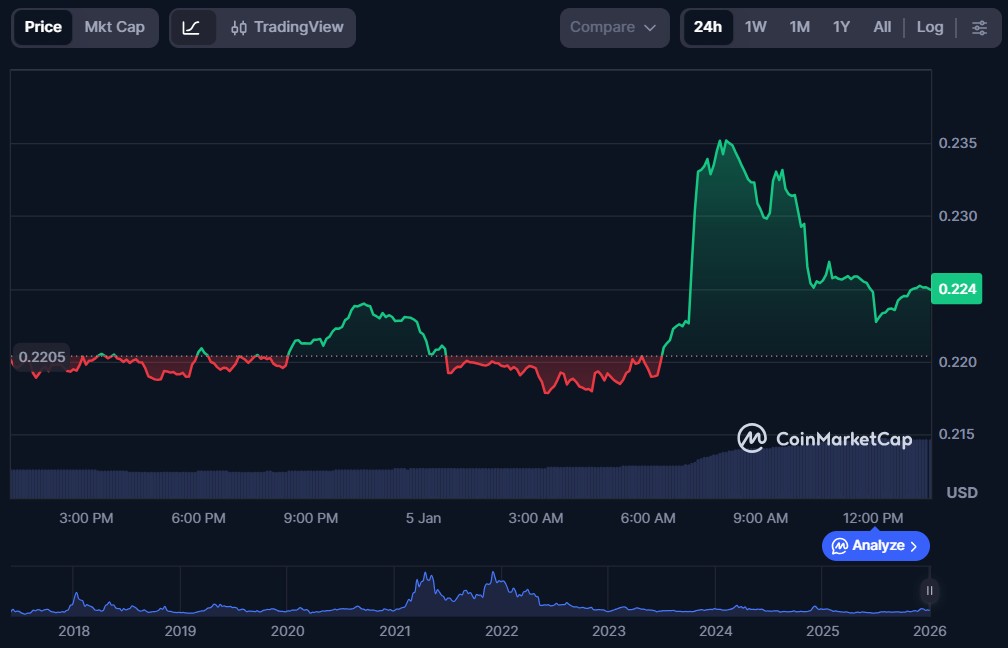
In the digital age, attention is one of the most valuable commodities. Basic Attention Token (BAT) leverages this by transforming how users, advertisers, and publishers interact online. Built on the Brave browser, BAT rewards users for viewing privacy-respecting ads while giving advertisers better ROI and ensuring publishers earn fairly for quality content.
It creates a more transparent and efficient digital advertising ecosystem. Users receive BAT for their attention, which they can use to support their favourite content creators or spend within the ecosystem—aligning incentives for all parties involved.
BAT is currently changing hands at $0.2250, backed by a market capitalization of $336.39 million and a 24-hour trading volume of $23.04 million.
Also Read: 4 Simple Ways to Earn Passive Income with Stablecoins in 2026
Reasons To Buy Cryptos Under $1
High Risk, High Reward
Cryptos priced under $1 can carry significant risk, much like penny stocks. However, choosing the right one has the potential to multiply your initial investment several times over. It’s a strategy that has worked for many investors—provided the risks are weighed carefully.
Find Undervalued Coins
Lower-priced cryptos allow you to accumulate a larger number of tokens for the same investment. This can potentially boost future returns, as these assets often have more room for growth compared to higher-priced, well-known tokens.
Scale of Purchase
With cheaper cryptos, the number of coins you can afford to purchase is much higher. This is likely to help your future returns as low-priced assets may grow faster than the most popular tokens.
Also Read: 10 Crypto Scams to Be Aware of in 2026
Conclusion
As 2026 unfolds, crypto assets priced under $1 continue to attract attention not because of affordability alone, but because they represent early-stage opportunities within a maturing market. Many of these tokens are backed by established networks, active communities, or evolving use cases that aim to address real challenges across payments, infrastructure, and digital engagement.
At the same time, low-priced assets come with higher volatility and varying degrees of risk. Separating long-term potential from short-term noise requires a focus on fundamentals, ecosystem growth, and consistent development rather than price perception. For investors navigating 2026, under-$1 crypto assets can offer meaningful exposure to future growth—when approached with research, patience, and a clear risk strategy.
In the grand scheme of things, ZebPay blogs are here to provide you with crypto wisdom. Get started today and join 6 million+ registered users to explore endless features on ZebPay!