

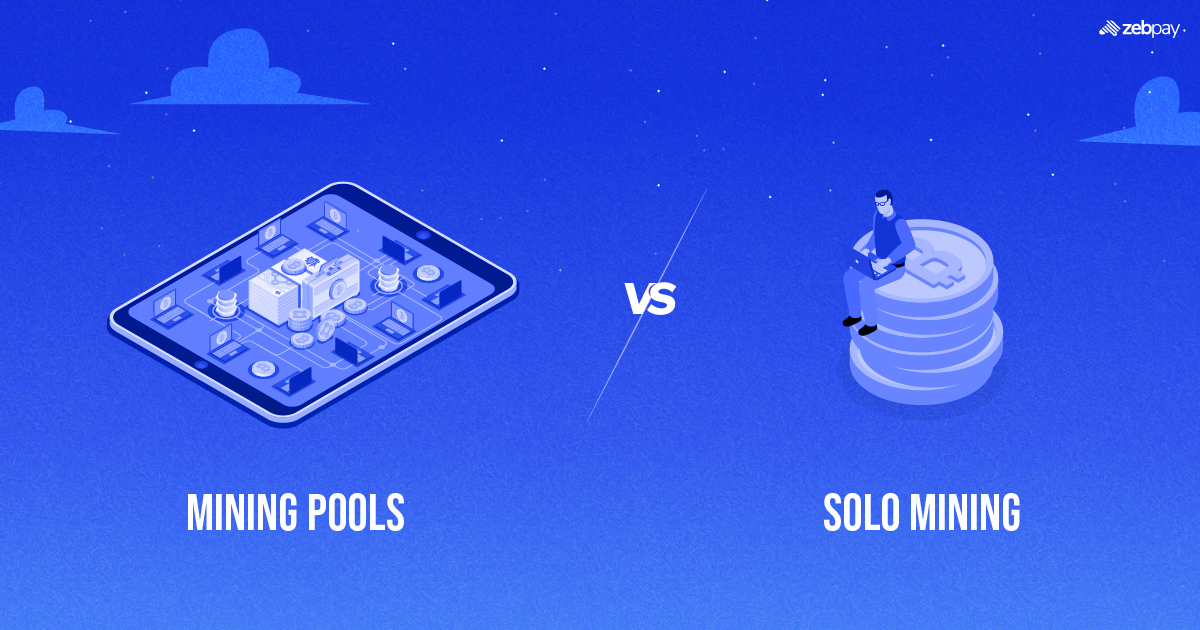
Mining is the process of creating new blocks of transactions on a blockchain that uses proof-of-work, drawing inspiration from the scarcity of resources like gold. In these systems, digital assets such as Bitcoin have a fixed supply, and mining becomes the only way to release new tokens into circulation while also securing the network by generating, validating, and adding blocks to the chain. This is where comparisons like solo mining vs pool often arise, as different methods impact efficiency and reward potential.
Before the shift toward proof-of-stake in some networks, miners relied on powerful hardware and inexpensive electricity to stay profitable, since regular computers rarely produced enough rewards to cover mining expenses. To understand which method suits different miners, it’s important to look at solo vs pool mining, especially since individual miners often struggle to compete with collective hashing power. These contrasts also highlight the broader debate of crypto mining pool vs solo, illustrating how miners either work independently or combine resources to improve their chances of earning consistent block rewards.
While pool mining and solo mining share similarities, the key distinction lies in individual versus collaborative efforts. Solo mining involves working alone, while pool mining entails collaboration with other miners. In pool mining, participants combine their computing power to enhance the likelihood of mining a block, functioning similarly to staking pools in the proof-of-stake mechanism. This article will delve into a comparison of pool and solo mining, exploring their advantages and disadvantages to determine the optimal circumstances for each crypto-mining method.
Read more: Proof of Work vs Proof of Stake
Mining Pools: Strength in Numbers
Let’s explore some advantages associated with mining pools:
Consistent Rewards
Mining pools provide regular and predictable rewards. Miners receive a portion of the block reward whenever the pool successfully mines a block, irrespective of their mining power.
Reduced Variability
Pool mining helps mitigate the fluctuations in mining income. Earnings are less susceptible to the unpredictability seen in solo mining, contributing to financial stability.
Lower Hardware Requirements
Mining pools enable newcomers to participate with less powerful hardware since they contribute collectively to the pool’s computing power.
Learning Opportunity
Joining a mining pool offers beginners valuable experience and insights into the mining process without the challenges associated with solo mining.
Support and Community
Mining pools often boast active communities, providing a platform for beginners to seek assistance, share experiences, and learn from more seasoned miners.
However, there are some drawbacks to mining pools:
Pool Fees
Mining pools typically impose fees, potentially reducing overall earnings. It is crucial to comprehend these fees before joining a pool.
Centralization Concerns
Critics argue that mining pools contribute to the centralization of mining power, as a few large pools can control a significant portion of the network’s hash rate.
Solo Mining: Doing It Alone

Now that we have seen the benefits of mining pools, let us explore some of the benefits of solo mining:
Autonomy
Independent miners have full control over their mining activities. They can decide which crypto to mine when to engage in mining, and the extent of computing power allocated to the mining process.
No Charges
In contrast to participants in mining pools who are obliged to pay fees to the pool operator, solo miners are exempt from any fee payments.
Non-Collaborative
Solo miners retain all the rewards garnered from mining, with no obligation to share their earnings with other miners.
Increased Reward Potential
While the likelihood of solo miners discovering a block is considerably lower than that of pool miners, if successful, they receive the entire reward without dividing it among others.
Privacy
Solo mining offers a higher level of privacy, as there is no requirement to communicate or disclose personal information to other members of a mining pool.
Cons of Solo Mining
Solo mining presents challenges, especially for beginners, and comes with various risks and limitations. Here are the drawbacks of solo mining to consider:
Low Block Discovery Probability
Solo mining is associated with diminished chances of discovering blocks, given that an individual miner possesses less hashing power compared to a collective pool of miners.
Substantial Equipment Investment
Engaging in solo mining necessitates high-end hardware, such as expensive ASICs, which require a significant investment for both purchase and operation.
Fluctuating Mining Difficulty
The mining difficulty in solo mining can experience significant spikes over time, posing increased challenges for individual miners to earn rewards.
Unpredictable Rewards
Solo mining yields unpredictable revenues as rewards depend on luck rather than the consistent block generation observed in pool mining.
Time-Consuming
The process of block generation takes longer when working independently, and dedicating resources to solo mining may not always result in profitable returns.
Lack of Backup Support
In the event of downtime or technical issues with the equipment, solo miners lack backup support, potentially leading to disruptions in mining activities.
Profitability Considerations
Analyzing historical data is essential for understanding how mining pools have performed over time, offering miners a clearer view of profitability patterns. By reviewing past results, miners can compare solo mining vs pool performance and identify which pools provide more consistent returns. Since most pools charge a fee on earned rewards, it’s important to weigh these costs—along with electricity, hardware upkeep, and other factors—when evaluating overall profitability. Elements such as the crypto being mined, network difficulty, pool credibility, and fee structures all influence outcomes, helping miners differentiate between a crypto mining pool vs solo setup when choosing the most rewarding option.
On the other hand, solo vs pool mining comparisons show that solo mining requires far greater investment in equipment, power, and cooling systems. Miners must carefully estimate expenses and potential payouts to judge whether going solo makes financial sense. Solo setups also come with the challenge of long stretches without finding a block, which can lead to unpredictable earnings—making them less ideal for those who prefer steady income. Ultimately, the likelihood of block discovery depends on an individual miner’s hash rate versus the total network hash rate, adding an element of uncertainty to solo mining.
Read more: Ways To Earn Passive Income Through Crypto
Risk and Security Comparison
The inevitable outcome of the competitive pursuit of crypto is centralization. As crypto-mining evolves into a mature industry, those with greater resources and hashing power are taking control and are unlikely to relinquish their dominance.
A commonly discussed concern related to centralization is the occurrence of 51%-attacks( an attack where more than 51% of nodes on the blockchain are compromised). These incidents happen when a miner possesses more than half of the network’s hash rate, granting them significant influence over the proof-of-work consensus. This scenario can empower malicious actors to engage in double spending, essentially having and spending their coins simultaneously.
The geographical location of mining pools also contributes to mining centralization. Given that the profitability of mining operations heavily relies on electricity costs, miners naturally gravitate towards regions where these costs are lower.
Read more: What is Cloud Mining in the Crypto Industry
Security Concerns in Solo Mining
Engaging in solo mining, despite the possibility of substantial rewards, is laden with difficulties and risks. The likelihood of successfully mining a block as a solo miner is significantly impacted by the miner’s hash rate and the overall difficulty of the network:
Performance-Dependent Odds: The chances of winning a block are higher for faster systems, whereas slower systems face proportionally diminished probabilities.
Variance Risk: Despite employing a significant number of systems, luck remains a factor, and there is no assurance of winning a block. For instance, a 77-system operation might go for two years or more without achieving a successful block, resulting in financial challenges.
Choosing the Right Path
Solo mining can be an effective route for experienced miners who have powerful hardware and the confidence to mine blocks independently. It appeals to those who prefer full control over their setup and rewards, and it often comes up in discussions about solo mining vs pool performance, especially for miners aiming for long-term gains without sharing profits.
For others, especially those exploring solo vs pool mining, joining a mining pool is usually the safer and more consistent choice, as it reduces risk and provides more frequent rewards. Still, miners with multiple top-tier ASICs or GPUs capable of delivering strong hash rates may find that crypto mining pool vs solo comparisons lean in favour of solo mining for better long-term potential.
Read more: How To Build A Crypto Mining Rig
Conclusion
Deciding between solo mining vs pool mining requires a close look at key factors such as profitability, mining difficulty, hardware capability, and expected reward frequency. While solo mining offers full autonomy and the chance to earn an entire block reward, it also demands significant investment and must contend with rising difficulty and inconsistent payouts — a core consideration in any solo vs pool mining comparison. Pool mining, on the other hand, combines collective hash power to deliver more stable and predictable returns, though miners must account for associated fees and shared rewards.
Both approaches come with their own strengths and limitations, and the choice ultimately depends on a miner’s financial goals, tolerance for irregular earnings, and technical capacity. Evaluating these aspects helps miners determine which method suits them best when weighing a crypto mining pool vs solo strategy.
Keep yourself ahead of the crypto curve with ZebPay blogs. Click the button below and join 6 million+ users who trust ZebPay for their trading needs!
FAQs on Mining Pools vs Solo Mining
How does solo mining work compared to pool mining?
In solo mining vs pool, solo mining means a miner uses their own hardware to try and find blocks independently, keeping all rewards if successful. In contrast, pool mining combines the hash power of many miners, allowing them to find blocks more consistently and share rewards based on contribution.
How are mining rewards distributed in a mining pool?
In a crypto mining pool vs solo setup, rewards earned by the pool are divided among participants according to the hash power they contribute. Most pools use payout models like PPS, FPPS, or PPLNS to fairly allocate rewards.
Does solo mining offer higher rewards than pool mining?
In solo vs pool mining, solo miners can earn the full block reward, which is higher per block, but blocks are found very rarely. Pool mining provides smaller but frequent payouts, making it more predictable for most miners.
Are mining pools safer than solo mining?
Mining pools generally offer a more stable experience because they reduce the volatility of rewards and are maintained by professional operators. However, miners should still choose reputable pools to avoid risks like mismanagement or downtime.
What are the benefits of solo mining for advanced miners?
Advanced miners with powerful, specialized hardware may choose solo mining to maintain full control over the process and keep 100% of the block rewards. This approach can be more profitable long-term if they have enough hash power to compete with the network difficulty.