

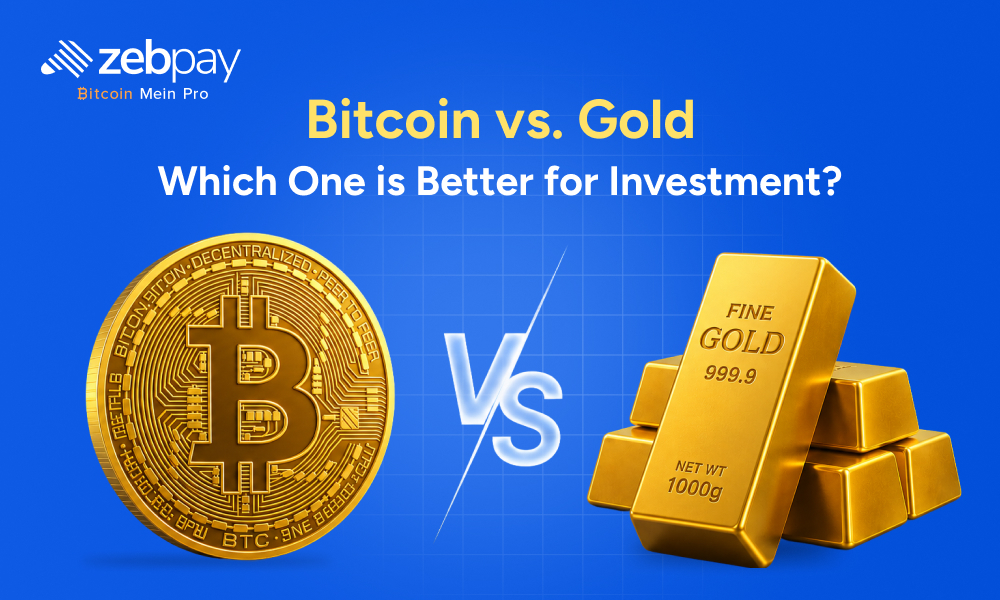
Historically, investors have considered gold a safe investment choice. It forms a significant part of many investment portfolios and has delivered strong returns over time. Since the pandemic, however, another asset has emerged as a popular investment option: Bitcoin. During the pandemic, Bitcoin outperformed gold in terms of returns, as millions of investors turned to the digital asset and placed their trust in it as a potential store of value.
Gold has long been the preferred choice during periods of economic uncertainty and has traditionally performed well during market corrections. It also serves as a key reserve asset for central banks around the world. Bitcoin, meanwhile, was launched in 2009 and gradually gained popularity among crypto enthusiasts before becoming a mainstream investment asset. Operating on a decentralised network and secured by blockchain technology, Bitcoin offers a unique alternative to traditional investments. During the pandemic, while the prices of many stocks declined, Bitcoin witnessed a significant surge in value.
Both gold and Bitcoin are often used as alternative investments to diversify portfolios. They are also viewed as potential hedges against inflation and the erosion of fiat currency value. This raises an important question: how does a relatively new digital asset compare with an investment vehicle that has been used to preserve wealth for thousands of years? More importantly, which of the two is better suited for investors looking to protect and grow their wealth over the long term?
Bitcoin vs. Gold: An Overview
The debate around gold vs. Bitcoin has gained momentum as investors seek assets that can preserve and grow wealth amid economic uncertainty. Gold has been trusted for centuries as a store of value, while Bitcoin has emerged as a digital asset with a fixed supply and growing global adoption.
Although both assets are often viewed as alternatives to traditional investments, they differ significantly in terms of history, volatility, accessibility, and underlying value drivers. Understanding these differences is essential for investors deciding between Bitcoin or gold, or considering a combination of both.
Gold as an Investment: Strengths and Weaknesses
Gold has long been regarded as a defensive asset that can help protect wealth during periods of inflation, currency depreciation, and economic instability.
Why Gold Has Been a Store of Value for Centuries
Gold’s value stems from its scarcity, durability, and universal acceptance. Civilizations across the world have used gold as a medium of exchange, a reserve asset, and a symbol of wealth. Unlike fiat currencies, gold cannot be printed or created at will, making it a trusted store of value.
Another reason for its enduring appeal is its role in central bank reserves. Governments and financial institutions continue to hold substantial amounts of gold as part of their strategic reserves, reinforcing confidence in the asset.
How Gold Performs During Economic Downturns
Gold often attracts investors during market downturns and geopolitical crises. When uncertainty rises, investors tend to move capital into assets perceived as safer stores of value. As a result, gold has historically demonstrated resilience during recessions and periods of financial stress.
However, gold is not without limitations. It generates no income, can be expensive to store securely, and may underperform growth-oriented assets during strong economic expansions.
Also Read: NPCI Introduces Drunix to Advance Enterprise Blockchain Adoption
Bitcoin as an Investment: Strengths and Weaknesses
Bitcoin has transformed from a niche technological experiment into one of the world’s most recognized digital assets. Its decentralized nature and limited supply have led many investors to view it as a modern alternative to gold.
Why Bitcoin is Called Digital Gold
Bitcoin is often referred to as “digital gold” because it shares several characteristics with the precious metal. It is scarce, difficult to replicate, and independent of central authorities. Bitcoin’s supply is permanently capped at 21 million coins, making it a predictable and transparent asset.
Unlike physical gold, Bitcoin can be transferred globally within minutes and stored digitally without requiring vaults or physical transportation. These characteristics have strengthened the argument for Bitcoin as a digital store of value.
How Bitcoin Performs During Market Uncertainty
Bitcoin’s performance during periods of uncertainty has been mixed. In some instances, investors have viewed it as an alternative asset and allocated capital toward it during concerns about inflation or currency weakness. At other times, Bitcoin has behaved more like a risk asset, experiencing significant price fluctuations alongside broader financial markets.
While Bitcoin has delivered substantial long-term returns since its launch, its higher volatility means investors should be prepared for sharp price swings over shorter periods.
Bitcoin vs. Gold: Head-to-Head Comparison
A direct gold vs. Bitcoin comparison reveals that both assets offer unique advantages depending on an investor’s objectives and risk tolerance.
Volatility: Which Asset is More Stable?
Gold is generally considered the more stable asset. Its price movements tend to be less dramatic, making it attractive for conservative investors seeking capital preservation.
Bitcoin, on the other hand, is significantly more volatile. While this volatility creates opportunities for higher returns, it also increases investment risk.
Also Read: What is Pump and Dump in Crypto?
Liquidity: Which is Easier to Buy and Sell?
Both gold and Bitcoin are highly liquid assets. Gold can be purchased through physical bullion, ETFs, and other investment vehicles, while Bitcoin can be traded around the clock on crypto exchanges.
Bitcoin’s 24/7 trading environment offers greater flexibility, whereas traditional gold markets may operate within specific trading hours.
Portability and Storage: Physical vs. Digital
One of Bitcoin’s key advantages is portability. Large amounts of value can be transferred across borders digitally with minimal logistical challenges.
Gold, being a physical asset, requires transportation, storage, and security arrangements. While these characteristics contribute to its tangible appeal, they can also increase ownership costs.
Scarcity: Gold’s Natural Limit vs. Bitcoin’s 21 Million Cap
Scarcity plays a crucial role in the value proposition of both assets. Gold is naturally scarce, while Bitcoin’s scarcity is enforced through code and consensus mechanisms.
Both assets derive part of their value from the fact that supply cannot be expanded rapidly in response to demand.
Also Read: Crypto Trading Strategies – A Complete Guide
How Bitcoin’s Fixed Supply Compares to Gold Mining Supply
Bitcoin’s maximum supply is permanently limited to 21 million coins. This cap is known in advance and cannot be altered without broad network consensus.
Gold’s supply, while limited, is influenced by mining activity, technological advances, and the discovery of new deposits. Although new gold enters circulation gradually, its total future supply remains less predictable than Bitcoin’s.
Bitcoin vs. Gold as an Inflation Hedge
Inflation concerns have prompted investors to consider both Bitcoin and gold as tools for preserving purchasing power.
How Both Assets Have Performed Against Inflation Historically
Gold has a longer track record as an inflation hedge and has historically maintained value over extended periods. During episodes of currency debasement and rising prices, gold has often attracted investor demand.
Bitcoin’s history is much shorter, making long-term comparisons more challenging. Nevertheless, its fixed supply has encouraged many investors to view it as a potential hedge against monetary expansion.
Which is a Better Hedge in Today’s Market?
The answer depends on an investor’s objectives. Gold offers stability, historical credibility, and lower volatility. Bitcoin provides scarcity, digital accessibility, and potentially higher growth potential.
Many investors no longer view the choice as Bitcoin or gold. Instead, they see both assets as serving complementary roles within a diversified portfolio.
Keep yourself ahead of the crypto curve with ZebPay blogs. Click the button below and join 6 million+ users who trust ZebPay for their trading needs!
FAQs
Is Bitcoin better than gold as an investment?
Whether Bitcoin is better than gold depends on an investor’s objectives and risk tolerance. In the gold vs. Bitcoin debate, gold is generally preferred by investors seeking stability and wealth preservation, while Bitcoin appeals to those looking for higher growth potential. Bitcoin has historically delivered stronger returns, but it is also significantly more volatile than gold.
Is Bitcoin a good hedge against inflation like gold?
Gold has a long-established track record as an inflation hedge and has been used for centuries to preserve purchasing power. Bitcoin, due to its fixed supply of 21 million coins, is also viewed by many investors as a potential hedge against inflation. However, because Bitcoin is relatively new and more volatile, its effectiveness as an inflation hedge remains a subject of ongoing debate.
What is the difference between Bitcoin and gold as investments?
The primary difference between Bitcoin and gold lies in their nature and history. Gold is a physical asset with thousands of years of proven use as a store of value, while Bitcoin is a digital asset introduced in 2009. Gold is generally less volatile and more widely accepted as a safe-haven asset, whereas Bitcoin offers greater portability, accessibility, and growth potential. A Bitcoin vs. gold comparison ultimately comes down to an investor’s preference for stability versus potential returns.
Which has given better returns: Bitcoin or gold?
Historically, Bitcoin has significantly outperformed gold in terms of returns since its launch. A Bitcoin vs. gold chart comparing long-term performance typically shows Bitcoin delivering much higher percentage gains. However, these returns have come with substantially greater price volatility and risk. Gold, while generating comparatively lower returns, has offered greater stability over time.
Is Bitcoin safer than gold?
The answer depends on how safety is defined. From a price stability perspective, gold is generally considered safer because it experiences smaller price fluctuations. From a technology and ownership standpoint, Bitcoin is secured by blockchain technology and can be stored digitally without relying on physical vaults. However, Bitcoin’s higher volatility means it carries greater market risk than gold.
Can Bitcoin replace gold as a store of value?
Bitcoin is often referred to as “digital gold” because of its scarcity and decentralized nature. While it has gained recognition as a store of value, it is still relatively young compared to gold’s centuries-long history. Rather than completely replacing gold, Bitcoin may continue to coexist alongside it, with each asset serving different roles in investor portfolios.
Should I invest in Bitcoin or gold?
The choice between Bitcoin or gold in 2026 depends on your financial goals, investment horizon, and risk appetite. Investors seeking stability and lower volatility may lean toward gold, while those willing to accept higher risk for potentially higher returns may consider Bitcoin. Many financial experts advocate diversification, allocating a portion of a portfolio to both assets rather than choosing one exclusively.
How do I invest in both Bitcoin and gold in India?
Indian investors can gain exposure to gold through physical gold, digital gold, sovereign gold bonds (subject to availability), gold ETFs, and gold mutual funds. Bitcoin can be purchased through registered crypto exchanges that support INR deposits and trading.
Before investing in either asset, investors should assess their risk tolerance, understand the applicable tax implications, and ensure that their allocation aligns with their overall financial goals. A balanced approach combining both Bitcoin and gold can help create a more diversified portfolio.