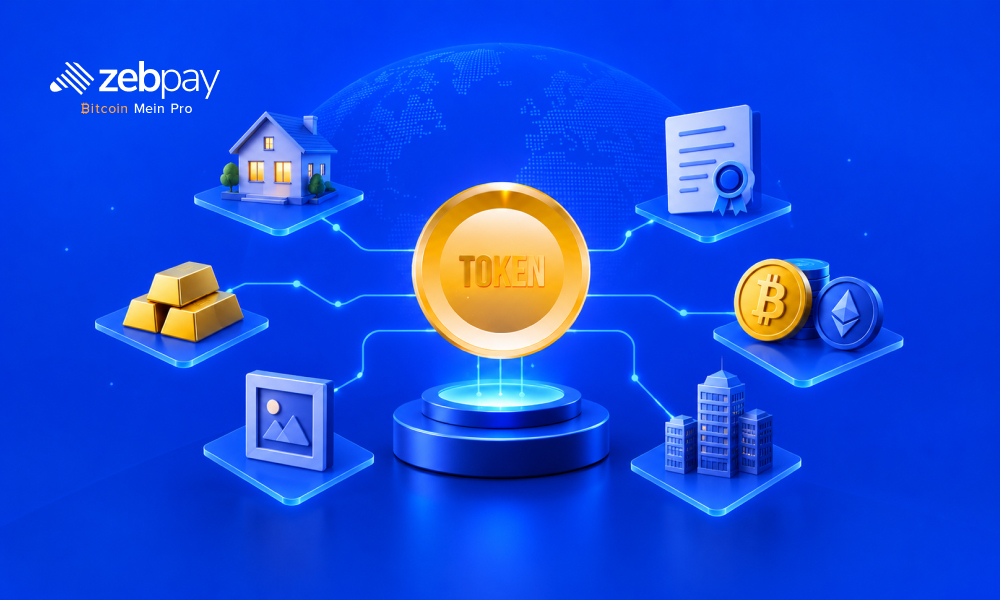





Nasdaq tokenized securities are in the news now as it has decided to push on-chain equities into the heart of traditional markets. This is a signal of just how far tokenization has moved from experiment to serious market infrastructure story.
The exchange has formally asked the US Securities and Exchange Commission for permission to let investors trade blockchain-based representations of listed stocks and ETFs on its existing order books, and its digital assets head says securing approval is now a “top priority.”
What Nasdaq Is Proposing?
In a rule filing submitted in early September 2025, Nasdaq asked the SEC to allow equity securities and exchange-traded products currently listed on its markets to also trade in a tokenized form. Such “stock tokens” would be:
- Digital representations of the same underlying shares
- Fungible with regular shares, using the same ticker and CUSIP
- Entitled to the same rights, voting, dividends, and other shareholder protections.
In practice, the investor would have a choice, trade by trade, whether to settle the traditional way, into a brokerage account, or in tokenized form, into a blockchain wallet managed by approved intermediaries like DTCC.
Nasdaq stresses that this is not a new derivative, but the stock itself in a different technical wrapper, cleared and settled under existing national market system rules.
Nasdaq’s Push for Tokenization
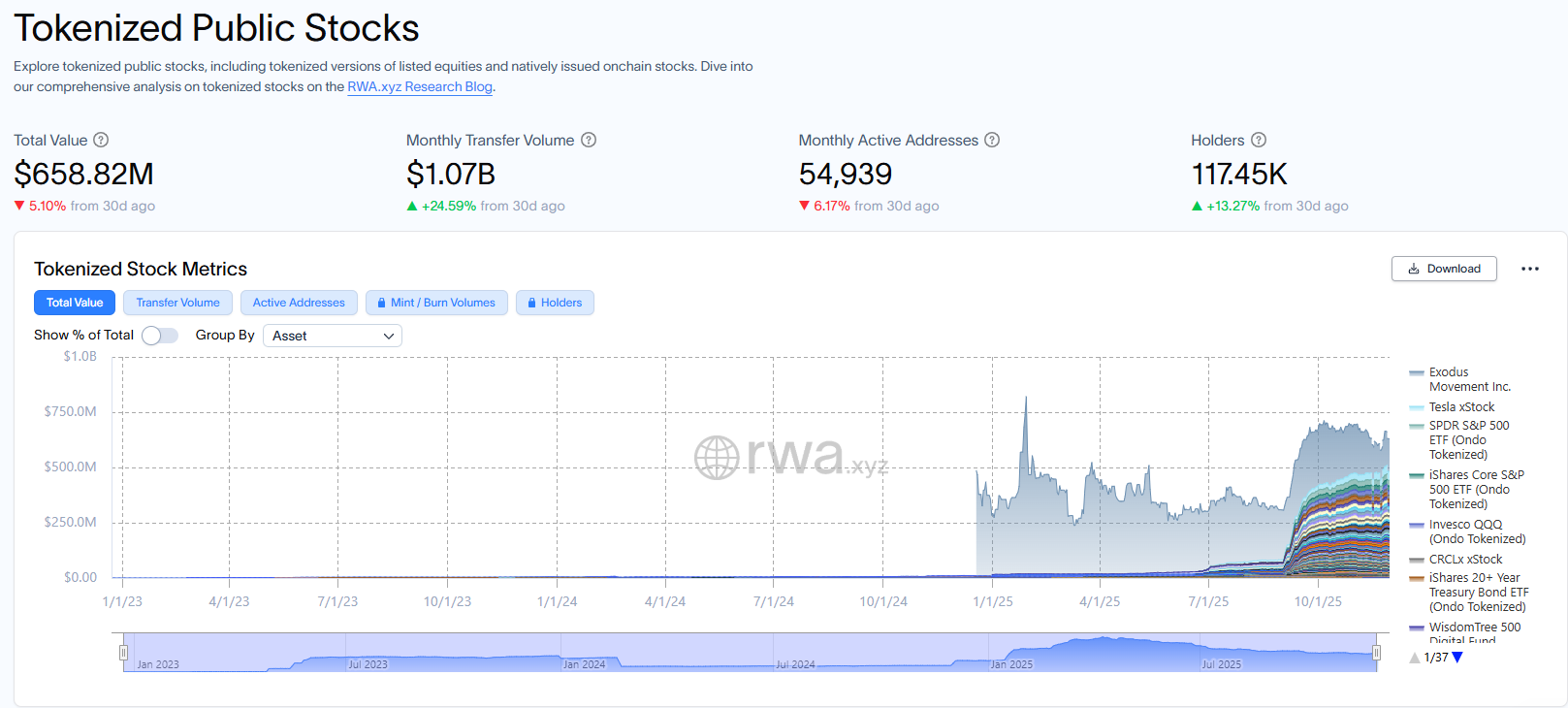
Image Source: RWA[dot]XYZ
Matt Savarese, the head of digital assets for Nasdaq, told CNBC that tokenized stock approval from the SEC is its top digital priority now, and the exchange will “move as fast as we can” inside that regulatory process. He emphasized three key points:
- Nasdaq is not trying to overhaul or bypass the current market structure.
- The goal is to embed tokenization inside rules and protections investors already know.
- It is explicitly an “investor‑led” and SEC‑supervised approach, and not a parallel, unregulated market.
Nasdaq CEO Adena Friedman has likewise framed tokenization filing as an evolutionary, not revolutionary, transition more akin to the shift from paper certificates to electronic shares, rather than an entirely new creation of finance.
How Tokenized Stocks Would Work?
Under the proposal and related public materials:
- Orders for tokenized and traditional shares would trade in the same order book, with the same execution priority and pricing rules.
- DTCC and other established clearing firms would be responsible for minting, recording, and settling the tokenized positions on a blockchain while operating under existing securities laws.
- Nasdaq tokenized securities would carry full shareholder rights, including voting and dividends, just as would their non‑tokenized equivalents.
In other words, this is “exchange‑embedded tokenization”: instead of migrating the equities onto an offshore or fully on‑chain venue, Nasdaq wants to layer blockchain settlement beneath the current market infrastructure.
Regulatory Scrutiny and Industry Reactions
The proposed rule changes from Nasdaq are under review by the SEC, which will include a comment period and possibly follow-up questions before making any decision. Regulators have been urged by market watchdogs such as the World Federation of Exchanges to ensure tokenized stocks preserve shareholder rights, transparency, and market protections in parity with traditional shares.
- Opinions in the digital asset sector are divided.
- Proponents say tokenized equities would bring efficiency, transparency, and increased access, particularly for global investors using blockchain rails.
- Skeptics do point out that if tokenized stocks remain tightly inside existing intermediaries and rules, the impact on open crypto ecosystems may be more limited than many people expect.
Nevertheless, the move by Nasdaq shows that tokenization is rapidly shifting from mere pilots into core market infrastructure discussions at the highest regulatory levels.
In the grand scheme of things, ZebPay blogs are here to provide you with crypto wisdom. Get started today and join 6 million+ registered users to explore endless features on ZebPay!
FAQs
- What has Nasdaq announced regarding tokenized stocks?
Nasdaq has filed a proposal for a rule change seeking approval to allow investors to trade a tokenized form of previously listed stocks and ETFs; these tokens would represent the same underlying shares and rights as traditional securities.
- How would tokenized stocks on Nasdaq work?
Tokenized shares of stock would be digital representations of existing equities that trade on the same order book as regular shares, with identical tickers, CUSIPs, voting rights, and dividend entitlements, using blockchain rails for settlement under current market rules.
- Is Nasdaq trying to replace the traditional market structure?
No. Nasdaq’s leadership has emphasized that the goal is to integrate tokenization into the existing, regulated framework rather than “upend the system,” treating it as an evolutionary step similar to the shift from paper certificates to electronic trading.
- Why is the approval from the SEC so crucial in this regard?
Because tokenized stocks remain securities, they’re subject to U.S. securities law. Approval from the SEC would give institutional and retail investors confidence that trading and settlement of these on-chain equities meet the same regulatory and investor-protection standards as conventional shares.
- What are the possible advantages of tokenized stocks?
The main potential benefits are: more efficient settlement, better collateral mobility, improved post-trade processes, and, in due course, the possibility of more flexible, programmable ownership structures with trading remaining within a regulated exchange environment.