

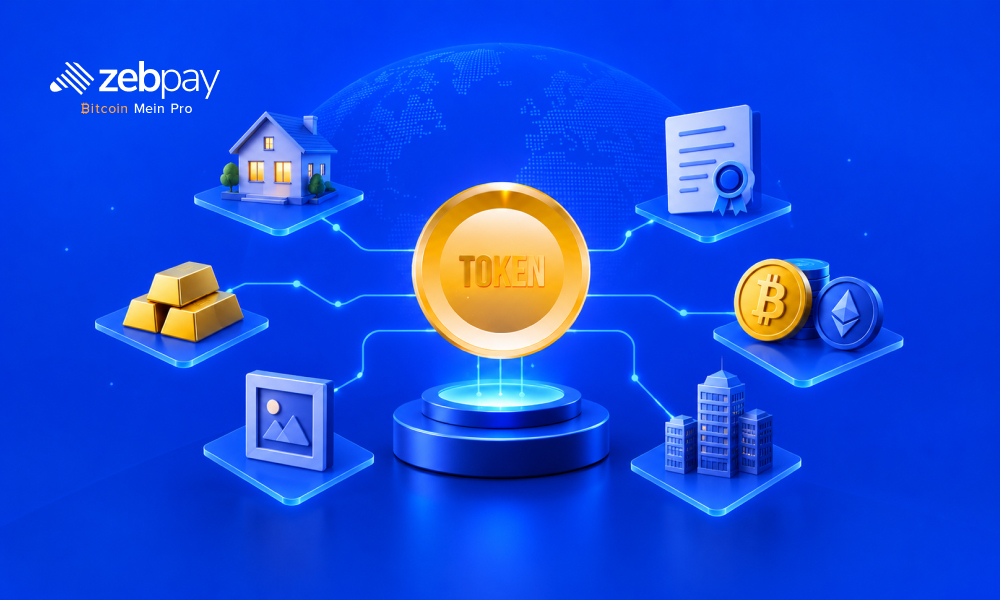


Imagine you have a pizza you want to share with your friends. Instead of one person owning the whole pizza, you can divide it into individual slices, with each slice representing a portion of the whole. Tokenization works on a similar principle, but instead of dividing a pizza, it represents an asset through digital tokens on a blockchain. This brings us to the question, what is a token in blockchain? A token is a digital unit that can represent ownership, value, or rights associated with an underlying asset or concept. Through tokenization, an asset can be represented by multiple digital tokens, with each token corresponding to a defined share, value or right. Think of each pizza slice having its own unique identifier that shows exactly what it represents.
The same principle can be applied to assets that are far larger and more complex than a pizza. Real estate is one example of how tokenization can be applied. A property can be represented by multiple digital tokens, allowing ownership or economic interests to be divided into smaller portions. Instead of requiring a single investor to acquire an entire property, tokenization can enable multiple participants to hold fractional interests, subject to the legal and regulatory structure of the arrangement. In essence, asset tokenization converts rights or interests associated with an asset into digital tokens recorded on a blockchain. This can make ownership easier to divide, track and transfer, while creating new ways to represent and access assets in digital form.
Also Read: L&T Enters India’s Tokenized Bond Market
How Does Tokenization Work?
Tokenization involves several steps to transform physical assets into digital tokens:
- Asset Selection: An asset, such as a house, a piece of art, or even intellectual property rights, is chosen to be tokenized.
- Asset Valuation: The asset is appraised or evaluated to determine its value. This step helps in setting the parameters and understanding the worth of the digital tokens.
- Token Creation: Once the value is determined, digital tokens are created on a blockchain platform. These tokens contain information about the asset they represent, like ownership details and any rights or benefits.
- Legal and Compliance: Depending on the jurisdiction, regulatory requirements and legal agreements may need to be fulfilled. This ensures that the tokenization process adheres to the applicable laws and regulations.
- Token Offering: The newly created tokens are then made available for sale or distribution. Interested individuals can purchase these tokens, becoming owners of a fraction or a whole of the underlying asset.
What are the Different Types of Tokenization?
Tokenization is a versatile concept that can be applied to various assets. Let’s explore some common types of tokenization:
Financial Asset Tokenization
Financial assets, such as stocks, bonds, or commodities, can be tokenized. By converting them into digital tokens, it becomes easier to trade and transfer ownership. Tokenized financial assets offer fractional ownership, allowing smaller investors to access markets that were previously limited to large institutions.
Real Estate Tokenization
Real estate assets such as homes, commercial buildings, and land can also be converted into digital tokens, a process often referred to as tokenization in real estate. This approach broadens access to the property market by enabling fractional ownership, lowering entry barriers, and making ownership transfers faster and more flexible.
Art and Collectibles Tokenization
Tokenization has revolutionized the art market. Artworks and collectibles can be tokenized, creating digital representations of the physical objects. These tokens provide proof of ownership and can be bought, sold, or traded on digital platforms. It also allows art enthusiasts to invest in art pieces they believe in.
Intellectual Property Tokenization
Intellectual property rights, such as patents, trademarks, or copyrights, can be tokenized. By converting these rights into digital tokens, creators can monetize their intellectual property more efficiently. Tokenization enables the fractional sale or licensing of intellectual property, making it accessible to a wider range of individuals or businesses.
Also Read: Tokenization vs. Encryption
Benefits of Tokenization
Increased Liquidity
Tokenization improves liquidity by enabling fractional ownership. Instead of needing a large sum of money to buy an entire asset, people can buy smaller portions of it through tokens. This opens up investment opportunities and allows assets to be traded more easily.
Enhanced Accessibility
Tokenization makes traditionally illiquid assets, such as real estate or artworks, more accessible. It allows a wider range of investors to participate and benefit from asset ownership, promoting financial inclusion.
Transparency and Security
Blockchain technology, often used in tokenization, provides transparency and security. Each transaction and ownership transfer is recorded on the blockchain, ensuring a trustworthy and immutable record of ownership. This reduces fraud and enhances the security of the assets.
Fractional Ownership
Tokenization enables fractional ownership, meaning that multiple individuals can own a fraction of an asset. This flexibility allows for smaller investments and diversification across multiple assets, reducing risk.
Challenges of Tokenization
Regulatory Uncertainty Across Different Markets
The legal status of a token can vary significantly depending on what it represents and where it is issued or traded. A token representing a security may be subject to securities laws, while a token linked to a commodity, property interest or other claim may fall under a different framework.
Cross-border tokenization adds another layer of complexity because the issuer, investor, custodian, blockchain network and underlying asset may all be located in different jurisdictions. As a result, investors should look beyond the label “tokenized asset”. The important questions are what the token represents, who legally owns the underlying asset, what rights the token holder receives, which regulator oversees the arrangement and what happens if the platform or issuer fails.
Also Read: India Gears Up for its First Tokenised Corporate Bond
Smart Contract Vulnerabilities and Security Risks
Smart contracts can automate token issuance, transfers, payments and other functions, but errors in their code can create security risks. A vulnerability could potentially affect how tokens are transferred or how assets are managed. There are also risks outside the blockchain itself.
Private-key management, custody, identity verification, oracle data, asset valuation and the management of physical assets can all affect the security of a tokenized arrangement. This is why tokenization blockchain systems require more than a technically functioning smart contract. Strong governance, audits, access controls and clearly defined recovery procedures can be equally important.
Liquidity Risk: Are Tokenized Assets Easy to Sell?
Fractionalisation can make an asset accessible to more investors, but it does not guarantee that a buyer will always be available. Liquidity depends on the number of participants, market infrastructure, trading restrictions, asset demand and the legal structure of the token.
A token representing a highly valuable but rarely traded property, for example, may still be difficult to sell even if it can technically be transferred instantly on a blockchain. This is an important distinction: technical transferability is not the same as market liquidity. A blockchain may allow a transaction to settle quickly, but a liquid market requires sufficient buyers and sellers.
What are some Tokenization Examples?
Tokenized Securities
Traditional stocks and bonds can be tokenized, allowing investors to own fractional shares or bonds. This makes it easier for individuals to invest in companies or participate in fundraising activities. One example of such a platform is Polymath.
Real Estate Tokenization Case Studies
Tokenization in real estate has become increasingly popular as properties are now being divided into digital tokens that represent fractional ownership. Imagine a commercial building split into many such tokens, allowing multiple investors to buy a share of the property and earn rental income based on the portion they hold. Platforms like Propy make this process seamless by automating property transfers and enabling these tokenized ownership stakes to be managed more efficiently.
Artwork and NFT Tokenization
Non-Fungible Tokens (NFTs) have become a hot topic in recent years. NFTs represent virtual assets like art, music, or virtual land. These tokens enable artists to monetize their creations and provide collectors with proof of ownership. Maecenas is a platform that allows investors to buy fractional ownership of fine art.
Tokenized Intellectual Property Rights
Creators can tokenize their intellectual property, such as patents or copyrights. This allows them to license or sell fractions of their rights, generating revenue and expanding their reach. IPwe is one such example that automates the process of transferring patents.
Tokenization and Blockchain Technology
Tokenization often goes hand in hand with blockchain technology. Blockchain provides the infrastructure for creating, managing, and trading digital tokens. Its decentralized and transparent nature ensures the security and integrity of tokenized assets.
Also Read: Digital Gold vs. Tokenized Gold vs. Physical Gold: Explained
Tokenization vs. Traditional Digitisation: What is the Difference?
Tokenization and digitisation both involve moving information or assets into a digital environment, but they are not the same process. Digitisation generally means converting something that already exists in a physical or traditional format into digital form. Tokenization goes a step further by creating digital tokens that represent an asset, ownership interest, claim or specific rights on a blockchain or other programmable ledger.
For example, converting a paper property record into an electronic document is digitisation. Creating blockchain-based tokens that represent defined rights or interests in that property is tokenization. The difference is not simply that one uses a computer and the other uses blockchain. It is about what the digital representation actually does and what rights are attached to it.
Why Simply Going Digital is Not the Same as Tokenization
Consider a traditional shareholding record. The information may already exist electronically in a database or demat account, but that does not necessarily make the underlying asset tokenized. The digital record primarily records ownership within a particular system. With tokenization, the representation is designed as a digital token that can incorporate ownership information, transfer rules and other conditions into its underlying infrastructure. Depending on the structure, smart contracts can automate certain actions when predefined conditions are met.
This distinction is important in real world asset tokenization. A property, bond, commodity or fund does not become tokenized merely because its documents are scanned or its ownership records are stored digitally. The token must represent a defined claim, right or interest, while the legal structure must establish what that token actually entitles its holder to.
How Blockchain Makes Tokenization More Secure Than Digitisation
Blockchain can provide features that are useful for tokenization, including a shared transaction record, cryptographic verification and transparent tracking of transfers. Instead of relying solely on one database controlled by a single organisation, blockchain-based systems can allow authorised participants to verify transactions against a common ledger.
Smart contracts can also automate parts of the transaction process. For example, a tokenized bond could be programmed to distribute interest according to predefined conditions. However, blockchain does not automatically make an investment or asset safe. The quality of the smart contract, custody arrangements, legal documentation, access controls and connection between the physical asset and its digital representation all remain important. A blockchain can accurately record that a token was transferred, but it cannot by itself guarantee that the underlying property, gold or other asset exists or that the token holder has enforceable legal rights to it.
Who is Using Tokenization Today?
Tokenization is moving beyond experimental blockchain projects into areas such as investment funds, bonds, commodities and financial-market infrastructure. Financial institutions are testing tokenized products to improve settlement, automate processes and bring traditionally off-chain assets onto programmable platforms.
How Governments Are Exploring Tokenized Bonds and Securities
Governments and financial-market institutions are also testing tokenized bonds and securities. The potential benefits include faster settlement, reduced reconciliation, greater programmability and more efficient interaction between assets and payments. Instead of treating the asset transfer, payment and settlement processes as separate steps, tokenization can allow them to operate together on programmable infrastructure. This is one reason tokenization blockchain applications are attracting attention from financial-market institutions. The objective is not necessarily to replace existing financial markets with crypto markets, but to improve how assets are issued, transferred, settled and managed.
Also Read: Top 5 Rollup Tokens in 2026
Future of Tokenization
The future of tokenization is set to expand dramatically as digital infrastructure becomes stronger and more widely adopted. As more people begin to understand what is token in blockchain systems and how these tokens represent real ownership, a broader range of assets is expected to move on-chain. This shift has the potential to reshape traditional finance by opening investment opportunities to anyone with internet access, reducing dependence on intermediaries, and creating more transparent markets. With growing regulatory interest and government support, tokenization is steadily evolving into a powerful ecosystem that could redefine how wealth is created, managed, and exchanged in the years ahead.
Conclusion
Tokenization is the process of turning real-world assets into digital tokens on a blockchain, helping people better understand what is token in blockchain and how it represents ownership or rights to an underlying asset. It brings major advantages such as higher liquidity, easier access, greater transparency, and the ability to own fractions of high-value items. This approach is already being applied to financial instruments, artwork, intellectual property, and especially tokenization in real estate, where properties can be divided into smaller, tradable units. As blockchain technology continues to advance, tokenization is poised to reshape how assets are bought, sold, and invested in, opening the door to a more inclusive and efficient financial system.
In the grand scheme of things, ZebPay blogs are here to provide you with crypto wisdom. Get started today and join 6 million+ registered users to explore endless features on ZebPay!
FAQs on Tokenization
What is tokenization in simple terms?
Tokenization is the process of representing an asset, ownership interest or right through a digital token on a blockchain. In simple terms, it can divide an asset into smaller digital units that can be recorded, tracked and transferred digitally.
How does tokenization work in blockchain?
Tokenization works by converting a real-world asset into digital tokens on a blockchain. Each token represents a share or specific right to the asset. The blockchain records ownership, ensures transparency, and allows these tokens to be traded securely without intermediaries.
What assets can be tokenized?
Almost any asset with clearly defined ownership or rights can potentially be tokenized, including real estate, gold, commodities, bonds, funds and carbon credits. Asset tokenization can make these interests easier to divide and represent digitally, subject to the applicable legal and regulatory framework.
What is the difference between tokenization and traditional digitization?
Traditional digitization simply turns physical information into digital files, like scanning a document. Tokenization, however, creates blockchain-based tokens that represent ownership or value tied to an actual asset. These tokens can be traded, divided, and transferred, something digitization alone cannot offer.
How is tokenization different from an NFT?
An NFT is a unique blockchain-based token, while tokenization is the broader process of representing an asset or right through digital tokens. For example, an NFT could represent digital artwork, while real world asset tokenization could represent an interest in property, gold or a financial asset.
How does real estate tokenization work?
Real estate tokenization divides a property—such as a house, apartment, or commercial building—into digital tokens. Investors buy these tokens to own a fraction of the property. They may receive rental income proportionate to their share, and they can sell their tokens easily without needing to sell the entire property.
How does tokenization make investing more accessible?
Tokenization breaks large, expensive assets into smaller, affordable units. This allows more people to invest in opportunities that were once limited to high-net-worth individuals. It also increases liquidity and lowers entry barriers, making investing more flexible and inclusive.
What is one example of tokenization?
A common example is tokenized artwork. A valuable painting can be divided into hundreds or thousands of digital tokens. Each token holder owns a fraction of the artwork, allowing more people to invest without needing to buy the entire piece.
Is tokenization legal in India?
Tokenization does not have one blanket legal status in India. Its treatment depends on the asset being tokenized, the rights represented by the token and the structure of the arrangement. Real world asset tokenization may therefore be subject to different regulations depending on the underlying asset and the entities involved.