



The financial system is gradually becoming more connected to blockchain infrastructure, with decentralised finance (DeFi) emerging as one of the most significant developments in this transition. DeFi enables financial services to operate through blockchain networks and smart contracts, allowing users to access activities such as lending, borrowing, trading, and asset management without depending entirely on traditional intermediaries. At the same time, tokenisation is bringing a wider range of digital and real-world assets on-chain, creating new ways to represent, transfer, and interact with value.
At the centre of this ecosystem are DeFi tokens, which are associated with protocols and applications that provide a range of financial services. They can power decentralised exchanges (DEXs), lending and borrowing platforms, stablecoin ecosystems, insurance protocols, and other on-chain financial applications. Depending on the project, these tokens can also be used for governance, incentivising participation, or supporting the broader operation of a protocol.
As DeFi infrastructure matures, its role is expanding beyond individual financial applications towards a broader on-chain financial ecosystem. The combination of programmable smart contracts, open access, and token-based participation is creating new models for how financial services can be built and accessed. Against this backdrop, here are some of the leading DeFi tokens shaping the ecosystem in 2026.
Also Read: How to Keep Your Crypto Safe with Cold Wallets: A Beginner’s Guide
What are DeFi Tokens?
DeFi tokens are a key component of blockchain-based financial ecosystems, powering protocols that enable users to access a growing range of financial services without relying solely on traditional intermediaries. Through smart contracts, DeFi platforms can facilitate activities such as lending, borrowing, trading, staking, and reward mechanisms directly on blockchain networks. The ecosystem is also expanding into the tokenisation of real-world assets, bringing assets and financial processes on-chain while creating new ways to access and manage them.
The role of DeFi tokens extends beyond facilitating activity within these platforms. Depending on the protocol, token holders may also receive governance rights that allow them to participate in decisions affecting its development and direction. This can include voting on protocol upgrades, new features, changes to parameters, and other ecosystem-level decisions.
As DeFi infrastructure continues to develop, these tokens are becoming an important part of how decentralised financial platforms operate and evolve. By combining programmable financial services with community participation, DeFi is creating alternative models for accessing, managing, and interacting with financial products in an increasingly on-chain economy.
10 DeFi Tokens
| Token Name | Current Price | Market Capitalization | 24-Hour Volume |
| Hyperliquid (HYPE) | $89.45 | $22.41 billion | $1.03 billion |
| Chainlink (LINK) | $13.47 | $10.08 billion | $320.17 million |
| Stellar (XLM) | $0.2037 | $7.13 billion | $202.40 million |
| Dai (DAI) | $0.9997 | $4.58 billion | $35.32 million |
| Uniswap (UNI) | $7.97 | $4.98 billion | $813.48 million |
| World Liberty Financial (WLFI) | $0.05442 | $1.72 billion | $42.68 million |
| Aster (ASTER) | $0.7021 | $1.89 billion | $116.58 million |
| Polkadot (DOT) | $1.11 | $1.90 billion | $167.25 million |
| Aave (AAVE) | $172.15 | $2.65 billion | $331.84 million |
| Sky (SKY) | $0.08351 | $1.95 billion | $42.74 million |
Note: This list has been made based on internal research and should not be taken as investment advice. Investors should do their thorough research before buying or selling crypto assets.
Hyperliquid (HYPE)
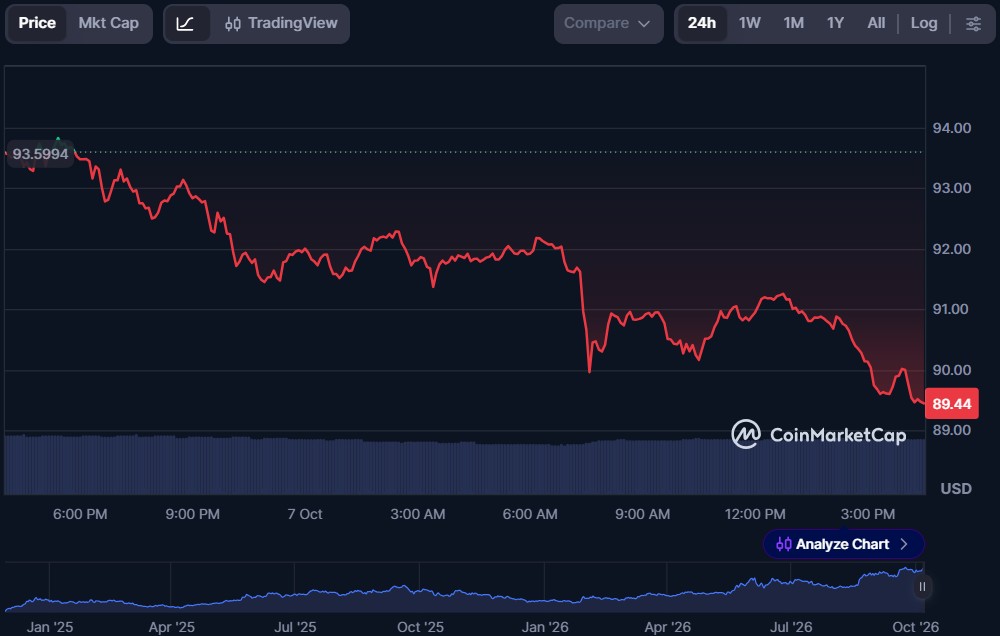
Hyperliquid is a high-performance decentralised trading protocol designed to deliver a seamless, on-chain derivatives trading experience. Built with a purpose-built Layer 1 blockchain, Hyperliquid combines low-latency execution, deep liquidity, and transparent on-chain settlement to support advanced financial applications. By operating its own custom infrastructure, Hyperliquid enables users to trade perpetual futures directly on-chain without relying on centralised intermediaries, while maintaining speed and efficiency comparable to traditional exchanges. The Hyperliquid ecosystem is driven by a growing decentralised community of traders, developers, validators, and liquidity participants. Its native token, HYPE, plays a central role in aligning network incentives, supporting ecosystem growth, and enabling governance as the protocol continues to evolve as a core component of decentralised finance.
Also Read: What is Tokenomics?
Chainlink (LINK)
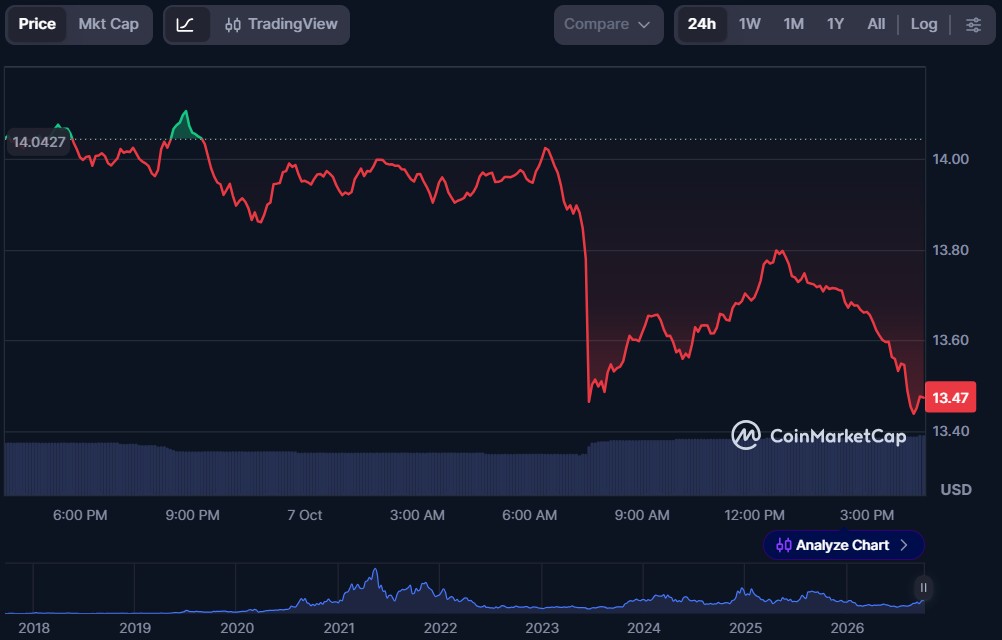
Chainlink, established in 2017, is a blockchain abstraction layer that facilitates the universal connection of smart contracts. By harnessing a decentralised Oracle network, Chainlink enables blockchains to securely engage with external data feeds, events, and payment methods. This capability is essential for complex smart contracts to incorporate the necessary off-chain information, thereby becoming the prevailing form of digital agreement. The Chainlink Network is propelled by a vast open-source community, encompassing data providers, node operators, smart contract developers, researchers, security auditors, and more.
Also Read: What is a Layer 1 Blockchain?
Stellar (XLM)
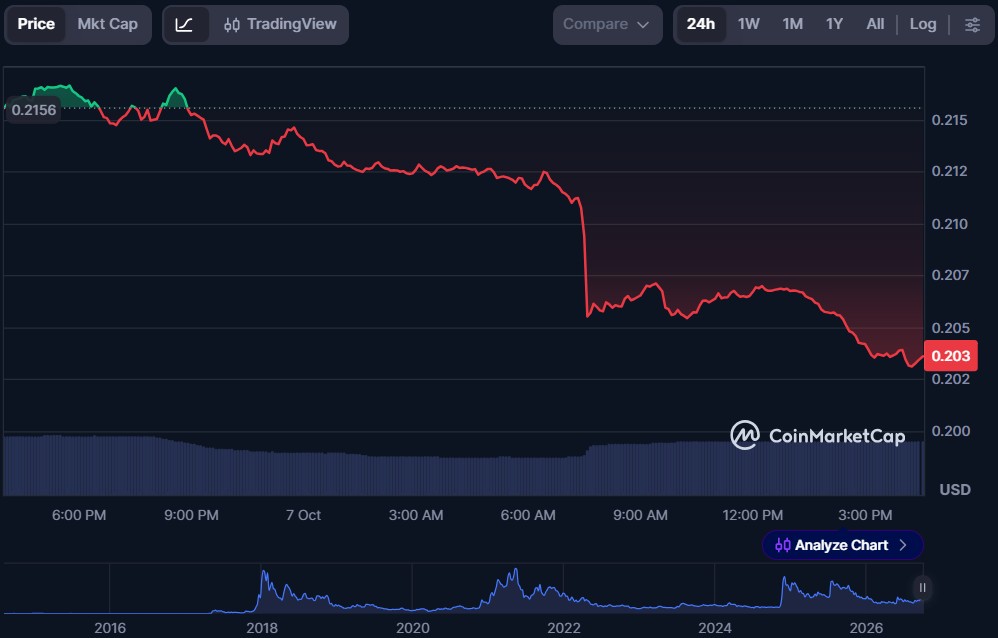
Stellar is an open-source blockchain network designed to facilitate fast, low-cost cross-border payments and the seamless exchange of digital assets. Launched in 2014, Stellar focuses on connecting financial institutions, payment systems, and individuals, enabling value to move across borders as easily as information. Through its decentralised network, Stellar allows users to issue, transfer, and trade assets while settling transactions in seconds with minimal fees. The Stellar network is supported by a global ecosystem of developers, validators, financial partners, and non-profit organisations. Its native token, XLM (Lumens), plays a key role in securing the network, preventing spam, and acting as a bridge asset to improve liquidity and efficiency in international payments.
Dai (DAI)
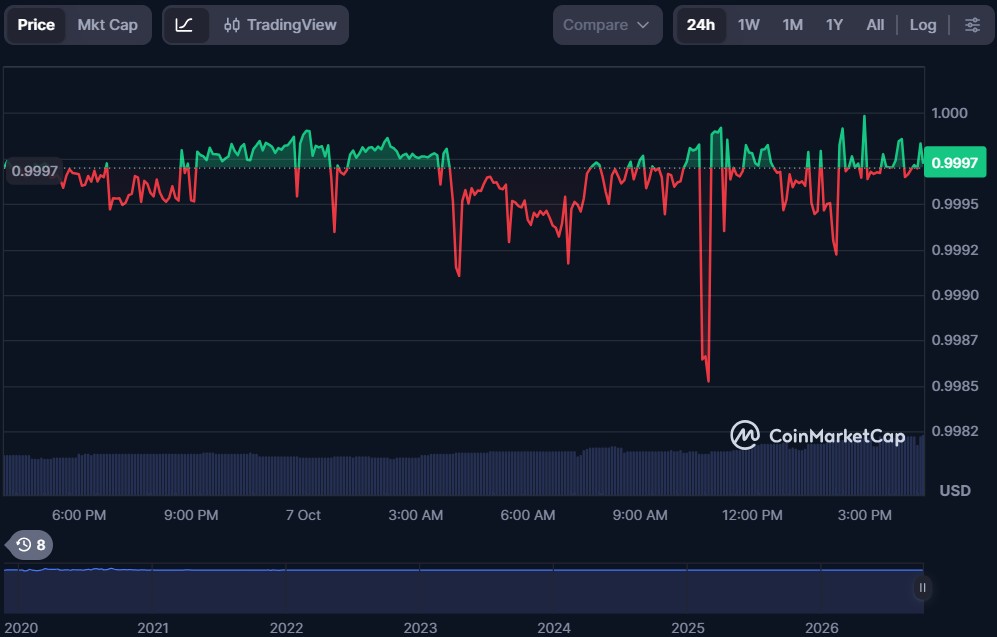
DAI, operating on the Ethereum blockchain, aims to maintain a stable value relative to the U.S. dollar through algorithmic mechanisms. Unlike centralised stablecoins, DAI is not supported by U.S. currency held in a bank account. Instead, it is backed by collateral within the MakerDAO platform, a decentralised autonomous organisation functioning on the Ethereum network. This setup enables individuals to engage in crypto lending and borrowing. In the event of an upgrade or closure of the Dai credit system, holders may be required to convert their DAI to Ethereum crypto via the Maker platform.
Uniswap (UNI)
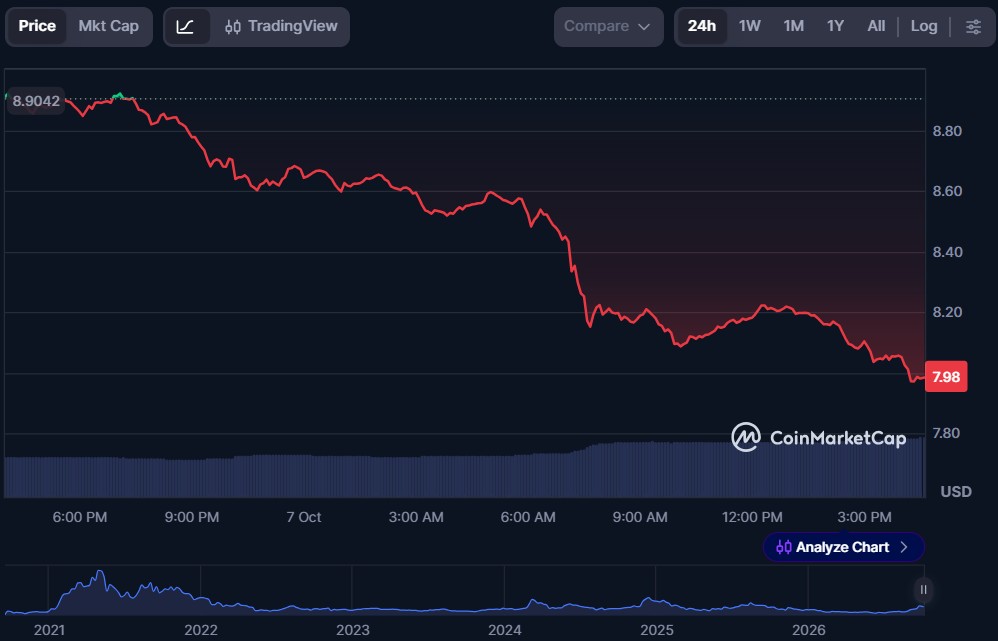
Uniswap is a widely recognised decentralised trading protocol, renowned for its role in promoting automated trading of decentralised finance (DeFi) tokens. As an automated market maker (AMM), Uniswap made its debut in November 2018 but has experienced significant growth in popularity this year due to the DeFi trend and the ensuing surge in token trading. Uniswap strives to maintain automated trading that remains entirely accessible to any token holder while enhancing trading efficiency compared to traditional exchanges. By addressing liquidity challenges with automated solutions, Uniswap circumvents the issues that affected the initial decentralised exchanges, thereby increasing efficiency.
Also Read: What is Uniswap (UNI)
World Liberty Financial (WLFI)
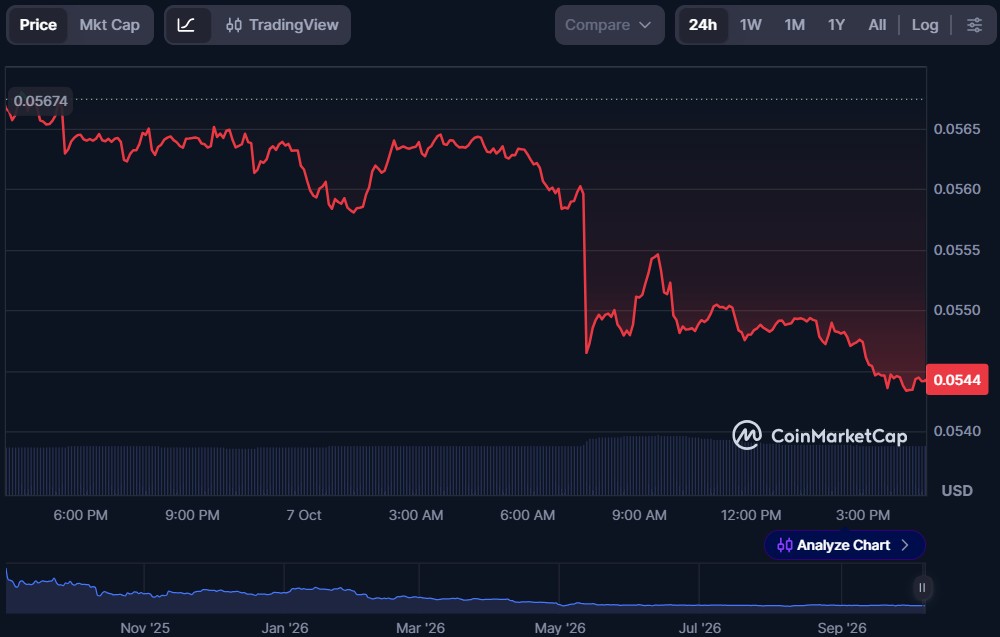
World Liberty Financial is a decentralised finance initiative focused on building an open and inclusive financial ecosystem through blockchain-based solutions. Designed to expand access to digital financial services, the project aims to bridge traditional finance and decentralised protocols by offering tools that support lending, asset management, and on-chain financial participation. Through its decentralised architecture, World Liberty Financial seeks to empower users with greater control over their assets while promoting transparency and efficiency across financial interactions. The World Liberty Financial ecosystem is supported by a growing community of developers, contributors, and users working toward broader DeFi adoption. Its native token, WLFI, is intended to play a central role within the platform by enabling governance participation, incentivising ecosystem growth, and supporting core protocol functions as the network evolves.
Also Read: What is Web3?
Aster (ASTER)
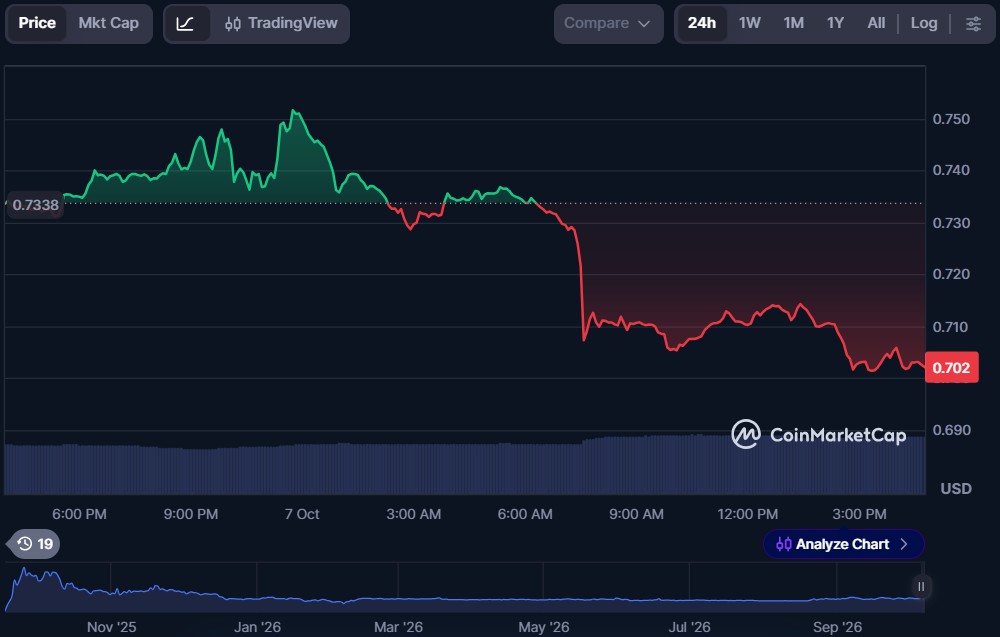
Aster is a decentralised protocol designed to expand access to advanced financial products within the DeFi ecosystem. The platform focuses on delivering efficient, on-chain trading and yield opportunities by combining automated mechanisms with transparent settlement. By leveraging smart contracts and decentralised infrastructure, Aster aims to provide users with greater control, flexibility, and accessibility across a range of financial use cases. The Aster ecosystem is supported by a growing community of developers, users, and contributors working collaboratively to enhance the protocol. The native token, ASTER, is intended to support governance participation, incentivise ecosystem activity, and align network participants as the platform continues to develop.
Polkadot (DOT)
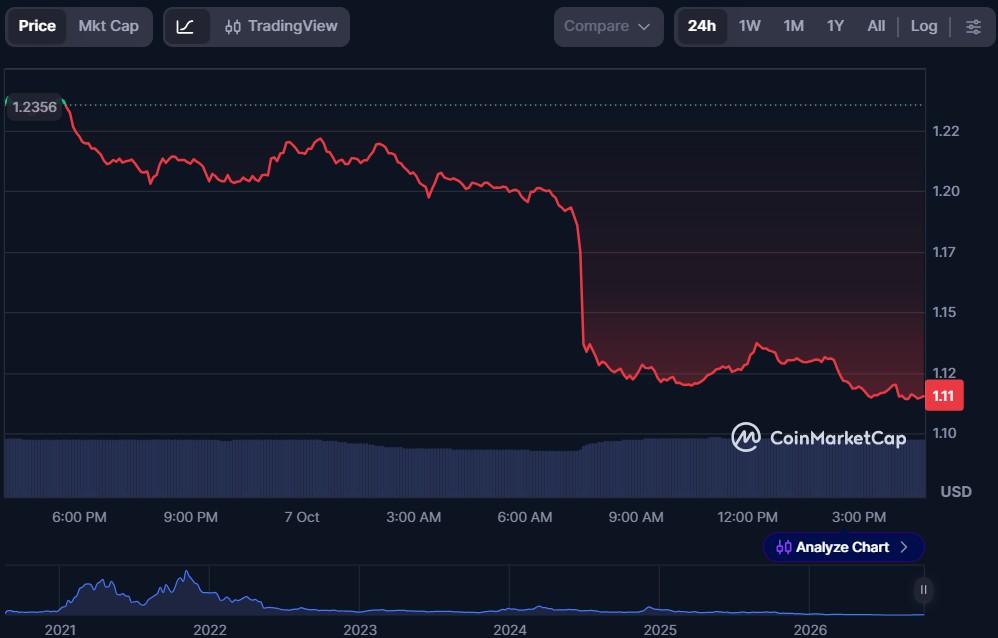
Polkadot is a next-generation blockchain platform designed to enable interoperability and scalability across multiple blockchains. Created to overcome the limitations of isolated blockchain networks, Polkadot allows independent blockchains—known as parachains—to securely share data and assets through a central relay chain. This architecture enables developers to build specialised blockchains that can operate together within a unified ecosystem. The Polkadot network is powered by a global community of developers, validators, researchers, and ecosystem partners. Its native token, DOT, is used for network governance, staking to secure the protocol, and bonding parachains to the network. By enabling seamless cross-chain communication, Polkadot aims to serve as a foundational layer for a more connected and scalable Web3 ecosystem.
Aave (AAVE)
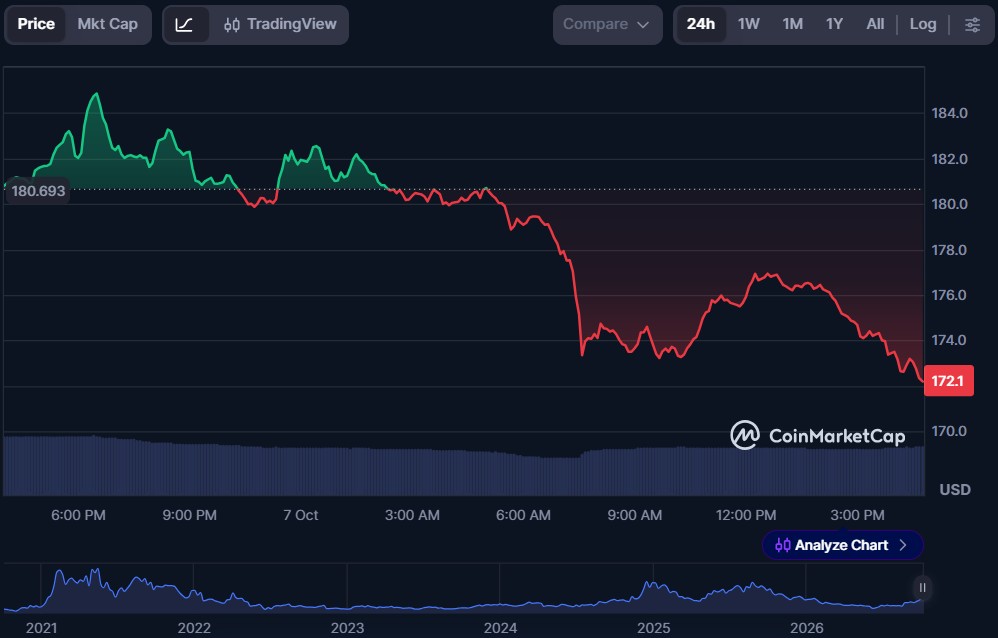
Aave is a leading decentralised lending protocol that enables users to lend their crypto assets to earn interest or borrow funds without the need for traditional financial intermediaries. Powered by smart contracts, the platform offers a secure and transparent way to access DeFi lending services. The AAVE token serves as the protocol’s governance token, allowing holders to vote on important proposals, including protocol upgrades and risk management decisions. Aave is also known for introducing flash loans, a unique DeFi feature that enables uncollateralised loans within a single blockchain transaction. Available across multiple blockchain networks, Aave remains one of the most trusted and widely used DeFi platforms.
Also Read: Proof of Stake: Explained
Sky (SKY)
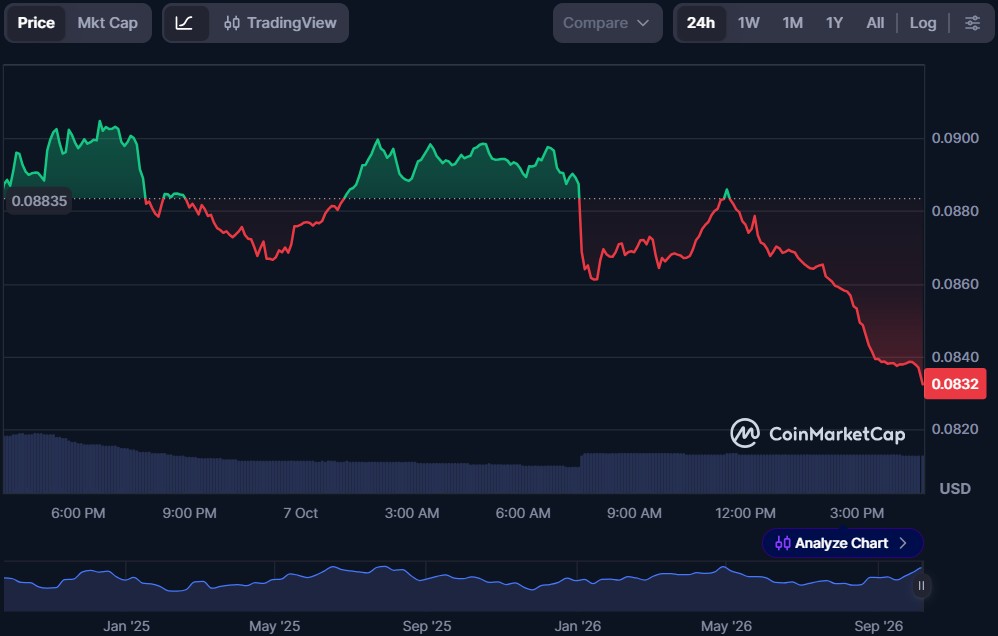
Sky (SKY) is the governance token of the Sky Protocol, the rebranded and evolved version of the MakerDAO ecosystem. The protocol powers USDS, a decentralised stablecoin, while also offering decentralised savings and lending solutions. Holders of the SKY token can participate in governance by voting on proposals related to protocol upgrades, collateral management, and future ecosystem developments. The move from MakerDAO to Sky introduced a more flexible governance model aimed at improving scalability and supporting long-term growth. As a key player in the DeFi space, Sky continues to strengthen the infrastructure behind decentralised stablecoins and financial services.
Should I Invest in DeFi Coins?
The DeFi landscape continues to broaden as new tokens introduce different technologies, utilities, and use cases. Their applications now extend well beyond conventional financial services, with some projects exploring opportunities in gaming, artificial intelligence, and scientific research. This expansion highlights the growing range of possibilities within the wider digital asset ecosystem. However, the diversity of DeFi projects also makes informed research important. Before considering any token, readers should assess its purpose, underlying technology, utility, and associated risks.
Also Read: What is the Future of Decentralised Finance (DeFi)
Conclusion
DeFi tokens have become a key component of the broader shift towards blockchain-based financial services, enabling users to access a range of functions without depending on traditional intermediaries. Their continued development could further improve how financial services are delivered by supporting greater transparency, efficiency, and accessibility.
Looking ahead, the direction of DeFi will be shaped by more than technological innovation alone. Community participation, strong security, scalability, and sustainable project development will also play an important role in determining how effectively DeFi tokens can address evolving user needs and expand their real-world applications in the years ahead.
In the grand scheme of things, ZebPay blogs are here to provide you with crypto wisdom. Get started today and join 6 million+ registered users to explore endless features on ZebPay!
FAQs on Top 10 DeFi Tokens to Invest
What are DeFi tokens and how do they work in decentralised finance platforms?
DeFi tokens are crypto assets that operate within decentralised finance platforms to enable services such as lending, borrowing, trading, and yield generation. They work through smart contracts on blockchains, allowing users to interact directly with financial applications without intermediaries.
How are DeFi tokens different from traditional cryptos like Bitcoin?
While Bitcoin is primarily designed as a store of value and medium of exchange, DeFi tokens are utility-driven and power decentralised applications. DeFi tokens often enable governance, staking, liquidity provision, or access to specific financial services within a protocol.
What types of services do DeFi tokens support within the crypto ecosystem?
DeFi tokens support a wide range of services, including decentralised lending and borrowing, decentralised exchanges, stablecoins, derivatives, prediction markets, insurance, and asset management protocols.
What is the role of governance tokens in DeFi platforms?
Governance tokens allow holders to participate in decision-making processes such as protocol upgrades, fee structures, treasury management, and future development proposals, giving users a direct voice in how a platform evolves.
How do DeFi lending and borrowing tokens function without intermediaries?
DeFi lending and borrowing tokens rely on smart contracts that automatically manage deposits, collateral, interest rates, and liquidations. Users lend assets to liquidity pools and earn interest, while borrowers access funds by providing collateral, all without banks or brokers.
What risks should investors consider before investing in DeFi tokens?
Investors should consider risks such as smart contract vulnerabilities, regulatory uncertainty, market volatility, liquidity risks, and protocol-specific failures. Understanding the technology and token utility is essential before investing.
How do decentralised exchanges use DeFi tokens for trading and liquidity?
Decentralised exchanges use DeFi tokens to facilitate trading and incentivise liquidity providers. Users deposit tokens into liquidity pools and earn fees or rewards, enabling peer-to-peer trading without centralised order books.
What makes stablecoins an important category within DeFi tokens?
Stablecoins provide price stability in an otherwise volatile market, making them essential for trading, lending, borrowing, and yield strategies. They act as a bridge between traditional finance and decentralised finance applications.
How do oracle networks like Chainlink support DeFi applications?
Oracle networks supply DeFi protocols with reliable off-chain data such as asset prices, interest rates, and real-world events. This data is critical for executing smart contracts accurately and securely within decentralised applications.
Can DeFi tokens be used outside of financial applications?
Yes, DeFi tokens are increasingly being used beyond finance, including in gaming, NFTs, AI-driven platforms, governance systems, and scientific or data-sharing applications through broader tokenisation use cases.
How does interoperability impact the growth of DeFi ecosystems?
Interoperability allows different blockchains and DeFi platforms to communicate and share assets seamlessly. This enhances liquidity, expands use cases, and accelerates innovation across the decentralised finance ecosystem.
Should beginners invest in DeFi tokens, and what should they research first?
Beginners can explore DeFi tokens, but they should first research the project’s use case, token utility, security audits, team credibility, and associated risks. Understanding how the protocol works is crucial before making any investment decisions.