

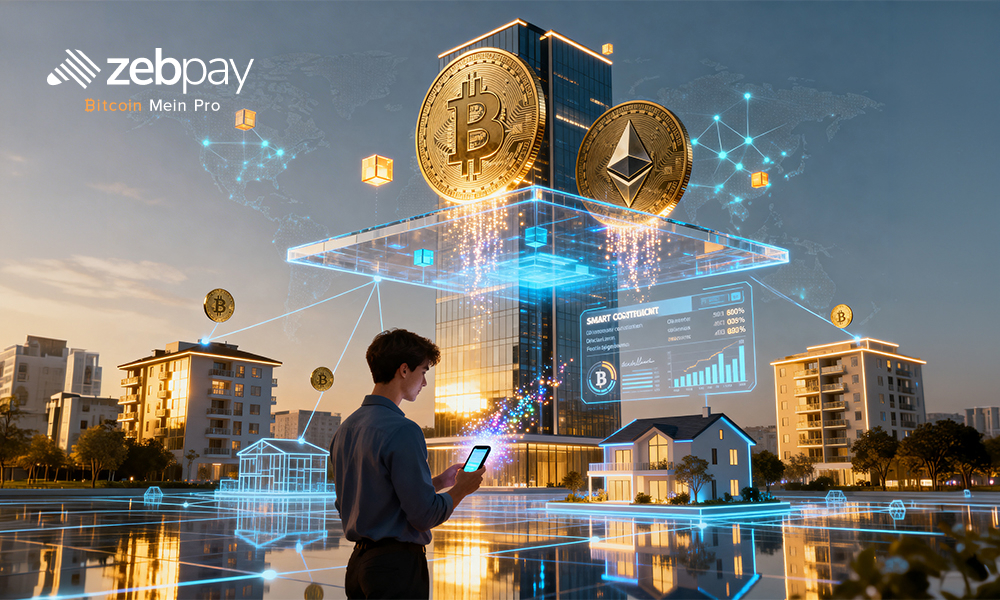
Are you sitting on a portfolio of digital assets and wondering if it’s finally time to trade your private keys for a set of front-door keys? As we navigate through 2026, the intersection of decentralized finance (DeFi) and brick-and-mortar reality is no longer a futuristic concept; it is a maturing market. But can you really buy a house with Bitcoin? How do you navigate the tax maze in India or the UAE? And is “tokenized real estate” actually a viable investment or just another buzzword?.
The landscape of real estate investment is undergoing a tectonic shift. What started as a niche experiment in “crypto-cities” has evolved into a global movement where Real World Assets (RWAs) are being brought on-chain to solve age-old problems of liquidity, transparency, and high entry barriers.
Read more: Tokenization Market to Reach USD18.8B by 2032
The Core Question: Is It Legally Possible?
The short answer is: Yes, but the “how” depends entirely on where you are.
In 2026, global regulations have bifurcated into two main approaches:
- Direct Crypto Payments: In jurisdictions like the UAE, Switzerland, and El Salvador, you can often transfer Bitcoin (BTC) or stablecoins (USDT/USDC) directly to a developer or a seller who is equipped with a digital merchant account.
- Conversion to Fiat: In countries like the USA, India, and the UK, the process typically involves an intermediary. You can convert your BTC to USD OR INR and sell your crypto for local currency (INR or USD) through a registered exchange, and that fiat is then moved into an escrow account to finalize the deed.
Why Invest in Real Estate via Blockchain?
Industry leaders, including BlackRock’s Larry Fink, have noted that the “tokenization of everything” is the future of capital markets. Here’s why investors are choosing the blockchain path:
- Fractional Ownership: Traditionally, you needed hundreds of thousands of dollars to invest in commercial real estate. Through tokenization, a property is divided into digital tokens. You can now own 1% of a shopping mall or a luxury villa for as little as $100.
- Eliminating Middlemen: Smart contracts, self-executing code on the blockchain, can automate escrow, title transfers, and even rental distributions. This reduces the need for expensive lawyers and title offices, potentially saving billions in transaction costs annually.
- Borderless Investing: Crypto allows a resident in Mumbai to invest in a Lisbon apartment without dealing with the friction of legacy cross-border bank wires and high currency conversion fees.
Read more: Top 10 crypto to invest in 2026
Top 7 Countries to Buy Real Estate with Crypto in 2026
If you are looking for the most “crypto-friendly” property markets, these nations lead the pack:
- United Arab Emirates (UAE): Dubai remains the gold standard. Many major developers (like Emaar or Damac) accept direct payments in BTC and USDT.
- Switzerland: In “Crypto Valley” (Zug), you can not only buy property with crypto but also pay your municipal taxes with it.
- Portugal: Offers a highly attractive tax regime where long-term crypto holdings (over one year) are often tax-exempt.
- El Salvador: As Bitcoin is legal tender here, every merchant, including real estate agents, is legally required to accept it.
- Georgia: Known for zero capital gains tax for individuals on crypto profits, making it a hotspot for Eastern European property.
- Turkey: High adoption rates have led to many luxury agencies offering “crypto-to-property” services, with prices often pegged to the USD.
- Thailand: While direct crypto-for-house trades are regulated, licensed exchanges facilitate the “crypto-to-fiat” conversion seamlessly for property deeds.
Step-by-Step: How to Buy Property with Bitcoin
If you’ve decided to move forward, follow this high-level roadmap:
- Verify the Seller: Confirm early if the seller or developer accepts crypto. Use niche networks or crypto-specialist real estate agents.
- Fix the Price: Because of volatility, agree on a valuation date. Many buyers convert their BTC to a stablecoin like USDT during the negotiation phase to “lock in” the property price.\
- KYC & AML Compliance: Even in crypto, you cannot escape “Know Your Customer” rules. You must provide a clear paper trail showing the source of your funds (e.g., exchange statements from a platform like ZebPay) to satisfy anti-money laundering (AML) laws.
- Digital Escrow: Use a smart contract or a reputable third-party facilitator to hold the funds until the title is officially transferred at the land registry.
Risks to Consider
While the benefits are many, the risks are real:
- Volatility: A 10% drop in BTC during the closing week could mean you suddenly can’t afford the house.
- Irreversibility: Unlike a credit card, a crypto transfer cannot be “charged back.” If you send funds to the wrong wallet address, they are gone forever.
- Regulatory Shifts: Laws can change. Always consult a local tax expert before making a multi-million dollar move.
Conclusion
Investing in real estate with crypto is no longer a “maybe”,it’s a “how.” Whether you are buying a fractional token of a warehouse in the US or a villa in Dubai, the blockchain is making property investment more accessible, transparent, and efficient than ever before.
In the grand scheme of things, ZebPay blogs are here to provide you with crypto wisdom. Get started today and join 6 million+ registered users to explore endless features on ZebPay!
FAQs
What is tokenized real estate?
It is the process of putting property ownership on the blockchain. A property is split into digital tokens, allowing for fractional investment and higher liquidity.
Which crypto is best for buying real estate?
Bitcoin (BTC) and Ethereum (ETH) are most widely accepted, but many investors prefer stablecoins (USDT/USDC) to avoid price volatility during the transaction process.
Can I get a mortgage using crypto?
While traditional banks are slow to adapt, “DeFi mortgages” are emerging, where you can use your crypto holdings as collateral to take out a loan for a property purchase.