

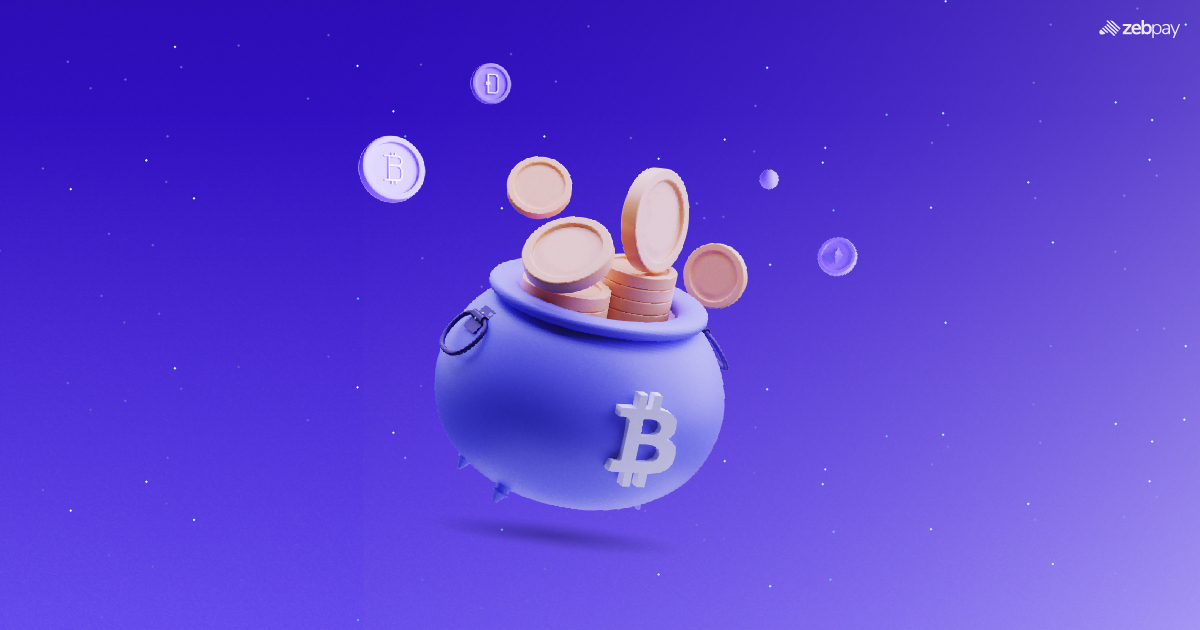
At its core, the Bitcoin network operates on a system where transactions are grouped into blocks and added to a secure, chronological chain. Each block contains encrypted data that must be verified before being permanently recorded. This verification is carried out by miners, who use significant computational power to solve complex mathematical problems, ensuring the integrity and security of every transaction. Because this process demands both hardware and energy, it comes at a cost. To incentivize miners, the network introduces a BTC block reward, which compensates them for validating transactions and adding new blocks to the chain. However, this reward is not fixed forever. Through a built-in mechanism known as halving, the Bitcoin block reward after halving is periodically reduced, making the process more competitive while also controlling the supply of new Bitcoin entering circulation.
Also Read: How To Build A Crypto Mining Rig
Bitcoin Block Reward Explained: Mining Incentives and Network Security
A block reward is granted to miners who successfully validate a block of transactions and add it to the Bitcoin blockchain. This reward aligns individual profit motives with the network’s overall health. Miners compete to solve cryptographic puzzles, and in doing so, they verify transactions, prevent double-spending, and maintain decentralization.
As mining requires substantial resources, the reward ensures that only serious participants contribute, strengthening the network’s resilience. Over time, the Bitcoin block reward after halving reduces, making efficiency and scale increasingly important for miners.
Why Is a Bitcoin Block Reward Important?
The block reward is the economic engine that keeps the Bitcoin network running. It incentivizes miners to dedicate computational power toward validating transactions and maintaining the blockchain. Without this reward mechanism, there would be little motivation for participants to secure the network, potentially leaving it vulnerable to attacks or inefficiencies. Beyond incentives, block rewards also control the issuance of new Bitcoin, ensuring a predictable and transparent supply schedule.
What Does a Bitcoin Block Reward Include?
Newly Minted Bitcoins
A key component of the BTC block reward is the issuance of newly created Bitcoins. This is how new supply enters the market. Each time a miner adds a block, they receive freshly minted BTC, following a fixed schedule that gradually decreases over time, especially after each halving event.
Transaction Fees in Block Rewards
In addition to newly minted coins, miners also earn transaction fees paid by users. These fees act as an extra incentive, particularly as the Bitcoin block reward after halving continues to shrink. Over the long term, transaction fees are expected to play a larger role in sustaining miner participation.
Also Read: Proof-of-Work (PoW) Consensus Mechanism
Bitcoin Halving and Its Impact on Block Rewards
Bitcoin halving is a pre-programmed event that reduces the BTC block reward by 50% approximately every four years. This mechanism ensures scarcity and mimics the extraction of finite resources like gold.
Each block reward after halving becomes smaller, which can influence miner profitability, market supply, and even price dynamics. Historically, halvings have contributed to tightening supply, often attracting increased attention from investors.
How Often Do Bitcoin Block Rewards Change?
The block reward changes roughly every 210,000 blocks, which translates to about four years. These scheduled reductions are automatic and embedded in Bitcoin’s protocol, ensuring predictability. Each adjustment results in a new Bitcoin block reward after halving, reinforcing the asset’s deflationary nature.
Bitcoin Block Reward Timeline and History
Since Bitcoin’s launch in 2009, the block reward has followed a clear downward trajectory:
- 2009: 50 BTC per block
- 2012: 25 BTC (first halving)
- 2016: 12.5 BTC
- 2020: 6.25 BTC
- 2024: 3.125 BTC
Each phase represents a new Bitcoin block reward after halving, steadily reducing the rate at which new bitcoins are introduced into circulation.
Also Read: What is Litecoin (LTC)
Difference Between Block Reward, Block Time, and Block Size
These three terms are often confused but serve different purposes:
- Block Reward: The incentive (new BTC + fees) given to miners
- Block Time: The average time taken to mine a block (around 10 minutes)
- Block Size: The amount of data a block can hold
While the block reward directly impacts miner earnings, block time and size influence transaction speed and network capacity.
How Block Rewards Secure the Bitcoin Network
The BTC block reward ensures continuous participation from miners, which is essential for network security. By incentivizing computational effort, it makes attacks, such as rewriting transaction history, extremely costly and impractical.
Even as the Bitcoin block reward after halving decreases, the combination of rewards and fees maintains a competitive mining environment, safeguarding the blockchain.
Also Read: What is Dogecoin (DOGE)
What Happens When Bitcoin Block Rewards Decrease Over Time?
As the block reward diminishes, miners increasingly rely on transaction fees for revenue. This gradual shift is intentional, preparing the network for a future where no new bitcoins are issued.
Each block reward after halving tightens supply, potentially increasing scarcity while also pushing miners to optimize operations and reduce costs.
Future of Bitcoin Block Rewards and Miner Incentives
Looking ahead, the BTC block reward will continue to decline until it eventually reaches zero, expected around the year 2140. At that point, miners will rely almost entirely on transaction fees.
The sustainability of the network will depend on whether fee-based incentives are sufficient to maintain security. However, Bitcoin’s design anticipates this transition, with each Bitcoin block reward after halving gradually preparing the ecosystem for a fee-driven model.
Also Read: Proof of Work vs Proof of Stake
In the grand scheme of things, ZebPay blogs are here to provide you with crypto wisdom. Get started today and join 6 million+ registered users to explore endless features on ZebPay!
FAQs on What is Bitcoin Block Reward
What is a Bitcoin block reward and how does it work?
A Bitcoin block reward is the incentive given to miners for validating transactions and adding a new block to the Bitcoin blockchain. Miners compete to solve cryptographic problems, and the first to do so earns the reward, ensuring the network remains secure and decentralized.
What does a Bitcoin block reward include?
A block reward includes two components: newly minted Bitcoins and transaction fees. The newly created BTC adds to circulating supply, while transaction fees are paid by users to have their transactions processed.
How often do Bitcoin block rewards change?
The BTC block reward changes approximately every 210,000 blocks, which is roughly every four years. These changes are pre-programmed and reduce the reward over time.
What is Bitcoin halving and how does it affect block rewards?
Bitcoin halving is an event that cuts the mining reward by 50%. Each Bitcoin block reward after halving becomes smaller, reducing the rate at which new bitcoins are introduced into circulation and increasing scarcity.
Do miners earn transaction fees in addition to block rewards?
Yes, miners earn transaction fees along with the block reward. These fees act as an additional incentive, especially as rewards decrease over time.
What will happen when Bitcoin block rewards reach zero?
When block rewards eventually reach zero (around 2140), miners will rely entirely on transaction fees. This shift is gradual and shaped by each Bitcoin block reward after halving.
How do block rewards help secure the Bitcoin network?
Block rewards incentivize miners to dedicate computational power to the network. This makes it extremely difficult for bad actors to manipulate transactions or compromise the blockchain.
What factors influence the value of Bitcoin block rewards?
The value of a BTC block reward depends on Bitcoin’s market price, mining difficulty, energy costs, and transaction fee volume.
How are block rewards different from transaction fees?
Block rewards include both newly minted Bitcoins and transaction fees, while transaction fees alone are payments made by users to prioritize their transactions on the network.