

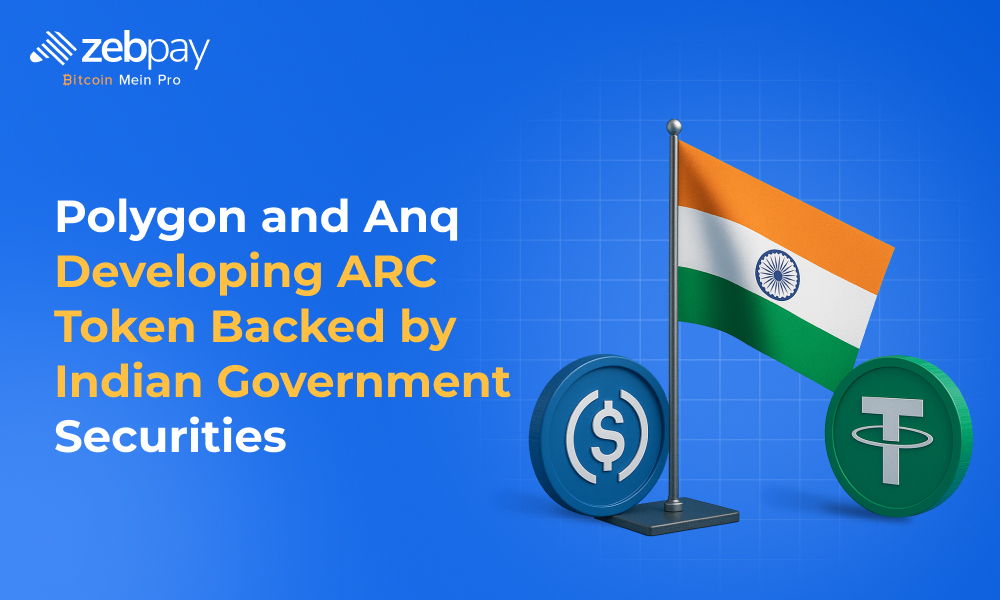


India is on the verge of a digital finance revolution with the development of ARC stablecoin, India’s first government-backed digital token. Polygon, a blockchain network and fintech startup Anq, has developed the Asset Reserve Certificate, or ARC. It is a fully collateralized stable digital asset with Indian government bonds and Treasury Bills.
ARC Stablecoin: Structure and Backing
Unlike other stablecoins, which are pegged to the US dollar, ARC is structured and intended differently. Each ARC token is minted only when Indian Government Securities or Treasury Bills are secured in reserve; hence, every digital token is 1:1 backed by the sovereign Indian assets. This ensures a level of transparency, safety, and compliance not found in foreign-backed or speculative tokens.
ARC is designed to modernize India’s digital financial ecosystem by keeping both liquidity and innovation within the domestic economy. This is in close alignment with regulatory guidance that ensures all digital rupee flows contribute to the strength of the Indian financial markets.
“Twin Rupee” Framework: ARC and the Digital Rupee
Polygon and Anq envision ARC as a programmable, compliant payment layer to complement the CBDC of the Reserve Bank of India. The Digital Rupee will handle official settlement as a means of regulated legal tender, while ARC stablecoin allows fintechs and regulated private entities to experiment and innovate in fully sovereign assets.
This twin-layered model keeps monetary policy oversight strictly with the government, permitting only technology-driven efficiency and programmability in digital payments, remittances, and e-commerce.
Impact and Market Potential
The ARC stablecoin project not only keeps capital within India but also supports government borrowing by driving demand for government debt instruments. Every new issuance of ARC represents the purchase of government securities directly, which might make fundraising cheaper for the government while bringing complete transparency and integrity into the system.
Industry leaders believe that if it succeeds, ARC might become a model for regulated stablecoins around the world that offer an alternative to volatile or foreign-controlled digital tokens.
Crypto Community Response
While all the conversations around its regulatory clarity and transparency have touted ARC stablecoin as a great development, there are still voices from within the crypto community that hold their skepticism with the centralization and censorship resistance trade-offs in the ARC that make it more like a digital rupee and not exactly a decentralized stablecoin. Polygon and Anq, however, underline that the intent is not to create another speculative asset, but a stable, secure complement to the Indian currency and financial system.
What follows from here?
Assuming necessary regulatory approvals and technical checks, the ARC stablecoin is likely to be launched in a few months. As India attempts to deepen its bond markets and digitize monetary infrastructure, ARC could provide a blueprint for how sovereign-backed tokenization can reinforce, rather than undermine, national financial goals.
In the grand scheme of things, ZebPay blogs are here to provide you with crypto wisdom. Get started today and join 6 million+ registered users to explore endless features on ZebPay!
Frequently Asked Questions
1. What is the ARC stablecoin?
ARC is a stable digital token fully backed by Indian government bonds and treasury bills, and is the first of its kind in India, created by Polygon and Anq.
2. How is ARC stablecoin different from other stablecoins?
Unlike USDT or USDC, ARC is not pegged to the US dollar but is anchored to Indian sovereign assets, creating onshore liquidity and fostering the debt markets of the government.
3. Who is behind the ARC stablecoin?
The blockchain platform Polygon has joined hands with the fintech company Anq to launch ARC in line with Indian regulatory and financial inclusion goals.
4. Is ARC a replacement for the Digital Rupee?
No, ARC acts like a programmable payments layer for private innovation, while the Digital Rupee continues to be the legal tender and settlement system of India in digital form.