


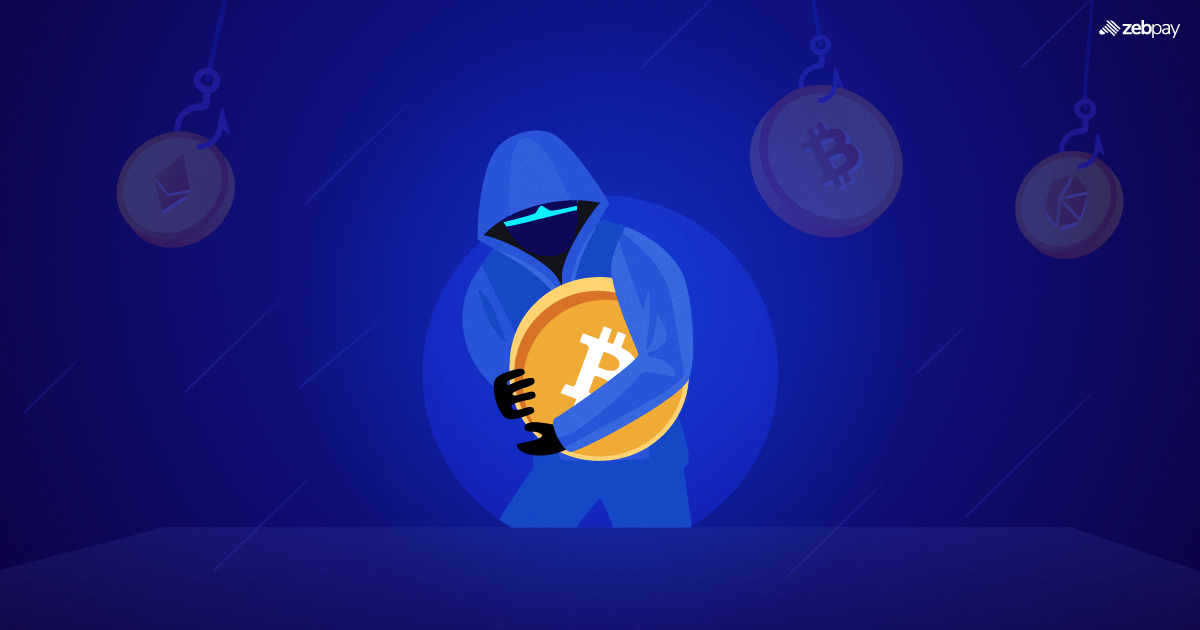
Crypto scams refer to fraudulent schemes where criminals trick users into sending them money or digital assets under false pretenses. These can take many forms, from fake investment platforms to social engineering traps like the rising crypto Tinder scam, where scammers build emotional trust before convincing victims to transfer funds. Because most transactions on blockchain networks are irreversible and many assets lack government oversight, recovering stolen funds is extremely difficult. As cryptocurrency scams continue to evolve, understanding what are crypto scams and how they operate is essential for protecting your money and staying safe in the fast-growing digital asset space.
Crypto Scams Mainly Fall Under Two Categories:
- Steal or transfer crypto directly: In this scam, criminals present fake business opportunities, impersonate authorities, or other malicious ways to transfer Crypto from their target’s crypto wallet to their wallet.
- Getting access to a user’s wallet: Scammers try to obtain private information like private keys or security codes, or even access hardware to gain access to their target’s crypto wallet.
This article will examine the major types of crypto scams and discuss how to spot, avoid, and report crypto scams.
Types of Crypto Scams
Crypto Investment Scam:
Criminals contact investors claiming to be experienced investment managers. The so-called investment managers claim to have made millions in crypto investing and promise the same to their targets. They usually ask for an upfront fee and steal this fee. They also ask for personal information, claiming to transfer funds but instead gaining access to the user’s crypto wallet.
Scammers also use fake celebrity endorsements to scam users of their Crypto. Criminals use fake photos to impose them on articles, ads, or accounts to make it look like a big celebrity is backing the investment. However, these are fake and another way to gain access to your personal information or steal money.
Crypto-Romance Scams:
Crypto scams frequently appear on dating apps, often unfolding as a long-distance interaction where the scammer slowly builds trust. In this type of crypto Tinder scam, the fraudster eventually persuades the victim to invest in or transfer crypto, only to vanish the moment the funds are sent.
Read more: How crypto scammers are using Tinder to scam investors?
Phishing Scams:
This scam is the most popular type and has been around for some time. Criminals send emails with malicious links to obtain personal information like security codes or crypto wallet key details. We should never enter sensitive information on an email link.
Read more: What is A Phishing Attack In Crypto?
Rug-Pull Crypto Scams:
Scammers pump up a new NFT or crypto project to get funding. They vanish after receiving substantial funding for the bogus project. People cannot sell fake NFT or crypto assets as the coding prevents them from doing so. Thus, leaving users with a valueless investment.
The most popular rug pull scam involved Squid coins, named after the popular tv series, Squid Games. Users had to play to earn crypto coins. Users of the online game had to buy tokens, which they would later exchange for another Crypto. The value of a Squid coin skyrocketed to $90 per coin from just one cent. Soon, the trading of these coins stopped and the money disappeared. People then attempted to sell their tokens, which resulted in the token’s value reaching zero. It is reported that scammers made about $3 million from this elaborate scam.
NFTs are commonly used to pull off rug pull scams.
Airdrop Crypto Scams:
Crypto and blockchain companies send free tokens to users using a process called crypto airdrop as a marketing tactic. But this, unfortunately, attracts scammers too.
A crypto airdrop is a marketing activity to create awareness and promote new cryptos entering the market. However, scammers are airdropping fake coins to digital wallets and can get access to funds and personal information. This scam aims to gain sensitive information like security codes or trick the target into sending crypto coins to a compromised wallet.
WhatsApp Crypto Scams and Social Media Giveaway Scams:
These are mainly fake posts on WhatsApp and other social media platforms promising free crypto giveaways. Some include fake celebrity accounts endorsing the campaign to lure users.
However, when a user clicks on the giveaway, they are asked for verification to receive the giveaway. It usually involves paying a fee to verify.
How to Identify Crypto Scams?
You must be aware to identify and spot red flags for information and communication involving crypto offers. We have listed a few below.
- Promises of free money and promises to multiply your money.
- Obvious misspellings and typographical errors in any crypto promotional material and communication.
- Fake celebrities and influencers.
- Fraudulent contracts lock you into holding crypto assets without being able to sell them.
- Big social media crypto Ponzi schemes.
- Vague or confusing details about where the money is going.
- Extortion, blackmail, or any other psychological manipulation.
How to Avoid Crypto Scams?
Most scams could be avoided if users had implemented safe practices when using or accessing their crypto wallet.
- Keep track of crypto wallet keys: Every crypto wallet has a unique key to access it. The wallet key information should be secured and you have all the control necessary to access the wallet key.
- When to use your wallet: If you have thousands of dollars in Crypto, you must take additional precautions to protect your assets. Ensure your wallet is guarded by robust security measures such as two-factor authentication, holding a large portion of your assets in cold wallets, and insurance policies against scams.
How to Report a Crypto Scam?
If you ever notice any suspicious activity in your crypto wallet, contact the customer support team of your exchange immediately to report the issue. Keep detailed records of all communication, including emails, chat transcripts, and screenshots, as these will be useful if further action is required. Because many cryptocurrency scams fall under broader categories of what are crypto scams, it is important to also file a complaint with your local cybercrime investigation cell. Make sure to attach all correspondence with the exchange to provide the authorities with complete context, helping them investigate and take appropriate action effectively.
How to Recover Scammed Crypto?
Once crypto is transferred to a specific wallet address, it cannot be reversed unless the recipient voluntarily sends it back. If you become a victim of a fraudulent transaction, it is crucial to report the incident to your exchange and the relevant law enforcement authorities. Since such cases often fall under the broader category of cryptocurrency scams and relate to understanding what are crypto scams, prompt reporting can help authorities take proactive steps to investigate and potentially recover the stolen tokens.
Concluding Thoughts
Crypto scams are of two types: having a target send Crypto to a compromised wallet and obtaining the user’s private information. You should be able to identify a crypto scam early if you understand the methods used by scammers to steal your crypto. You should secure your wallet keys and know the signs of a crypto scam.
Unravel everything that you need for your crypto journey via ZebPay blogs. Get started today and join 6 million+ registered users on ZebPay!
FAQs on Crypto Scams
What are crypto scams in short?
Crypto scams are fraudulent schemes where criminals trick users into sending money or crypto, promising fake returns, investments, or services. The goal is to steal digital assets through deception.
Why are crypto scams so common?
Crypto scams are common because blockchain transactions are irreversible, largely unregulated, and often anonymous, making it easier for scammers to take advantage of unsuspecting users.
What are the main types of crypto scams?
The main types include Ponzi schemes, fake crypto exchanges, phishing attacks, investment frauds, crypto Tinder scams, and fraudulent initial coin offerings (ICOs).
What is a phishing scam in Crypto?
A phishing scam occurs when attackers impersonate a trusted entity, like an exchange or wallet provider, to trick users into revealing private keys, passwords, or personal information, which is then used to steal crypto.
How do you report a crypto scam?
If you fall victim to a crypto scam, contact your exchange immediately, preserve all communication, and file a complaint with your local cybercrime investigation authorities. Providing detailed records helps them investigate and take action.