



Bitcoin experienced a highly volatile week, dropping from around $73,000 to below $60,000, which’s its lowest level since November 2024, before recovering to approximately $63,500 by the weekend. Despite the sharp decline, the move lacked the capitulation typically seen at bear-market bottoms. Market sentiment was initially pressured by news that Michael Saylor’s Strategy sold 32 BTC to fund preferred-share dividends, although the sale was negligible compared to its 845,000 BTC holdings. Risk appetite improved later in the week after President Trump announced progress toward ending the Iran conflict, helping ease geopolitical concerns. Falling oil prices, a rally in equities, and a strong Nasdaq debut by SpaceX, which surged 19% on its first trading day, further supported the recovery in crypto markets.
At the time of writing, BTC was trading at $65,500.
Also Read: Monolithic vs. Modular Blockchains – Understanding the Two Approaches
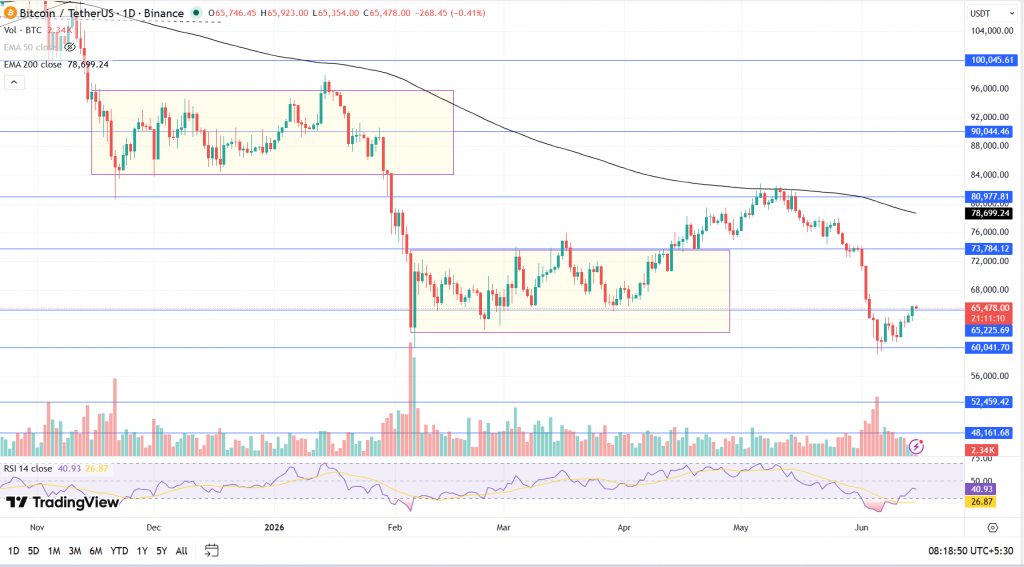
BTC, on the daily time frame, witnessed a relief rally from $60,000 to $82,850, albeit with declining volumes. However, the bulls failed to maintain their grip on the asset as the price faced resistance at the 200 EMA and subsequently witnessed a sharp decline. BTC plunged by almost 28%, making a recent low of $59,130. The asset has managed to close above the key support level of $60,000. If it sustains above this support, we can expect a relief rally. However, if it breaks and closes below the $60,000 support level, the price may decline further and test the $52,000 levels.
Key Levels
| Support 2 | Support 1 | Asset | Resistance 1 | Resistance 2 |
| $52,000 | $60,000 | BTC | $65,000 | $82,500 |
Unravel everything that you need for your crypto journey via ZebPay blogs. Get started today and join 6 million+ registered users on ZebPay!