

From the early days of static web pages to today’s highly interactive digital platforms, the history of the web tells a story of constant evolution. Web1 introduced basic online information sharing, while Web2 transformed the internet into a space driven by social media, user-generated content, and seamless digital interactions. However, this shift also led to growing concerns around centralized control, data ownership, platform dominance, and user privacy.
This is where the promise of decentralization begins to reshape the future. Enter the era of Web3 technology, where users are no longer just participants but true owners of their digital identity, data, and assets. Powered by Web3 blockchain infrastructure and fueled by the rise of Web3 crypto, this new phase of the internet is redefining trust, transparency, and control. Instead of relying on centralized intermediaries, Web3 enables peer-to-peer systems, permissionless access, and programmable value exchange—laying the foundation for a more open, secure, and user-centric internet.
What is Web3?
Web3 is widely regarded as the next major step in the evolution of the Internet. Although it’s still in its early stages, several exciting features are anticipated to define Web3’s future:
Open: Platforms and software built on Web3 technologies will be open-source and accessible to all. This openness fosters collaboration, innovation, and community-driven growth. By sharing the underlying code, Web3 promotes transparency and facilitates the free exchange of knowledge and resources.
Trustless: With Web3, transactions, data sharing, and other activities can happen without relying on a trusted third party. This means users won’t have to rely on big corporations like Google or Microsoft to safeguard their data. Thanks to cryptographic algorithms and smart contracts, Web3 ensures secure, transparent, and tamper-proof interactions, eliminating the need for intermediaries and centralized control.
Decentralized: Web3 operates without a central authority overseeing it. Instead, power and decision-making are distributed across the network, ensuring a more democratic system. This decentralization helps reduce risks linked to centralized systems, such as single points of failure and censorship.
Ultimately, Web3 envisions a new Internet architecture that is more transparent, democratic, and user-centric. Users will have greater control over their data and can engage with applications and services in a secure manner. By leveraging blockchain, artificial intelligence, and big data, Web3 promises to make the Internet smarter, more autonomous, and more user-friendly.
History of Web
The history of the web is a journey of continuous transformation, marked by three major phases—Web1, Web2, and now Web3. Each phase reflects how users interact with information, platforms, and each other in an increasingly digital world.
Web1, which emerged in the early 1990s, was primarily a “read-only” version of the internet. Websites were static, content was publisher-driven, and user interaction was minimal. It served as a digital library where people could access information but had little ability to contribute or engage actively.
The arrival of Web2 in the mid-2000s reshaped the internet into a highly interactive and social ecosystem. Platforms like social media networks, blogs, video-sharing sites, and e-commerce marketplaces empowered users to create, share, and monetize content. While this phase revolutionized connectivity and convenience, it also led to the rise of centralized platforms, data monopolies, user surveillance, and growing concerns around privacy and control.
Today, the web is entering its next evolutionary phase with Web3 technology. Built on Web3 blockchain infrastructure and powered by Web3 crypto, Web3 shifts control away from centralized corporations and back into the hands of users. It enables trustless systems, decentralized applications (dApps), smart contracts, and true digital ownership. Unlike earlier versions, Web3 allows users to control their identity, assets, and data without relying on intermediaries.
From static pages to social platforms and now decentralized networks, the evolution of the web reflects a broader shift toward transparency, security, and user empowerment—making Web3 a defining chapter in the ongoing history of the internet.
How Does Web3 Work?
Web3 is based on blockchain technology. This decentralized ledger stores data over a vast network, making it resistant to tampering and censorship. In Web3, the blockchain is used to store and verify transactions or smart contracts without the need for a central authority. Here’s a quick overview of getting started with Web3:
- You can interact with Web3 applications (dApps) through a web browser. You can also use a special app called a Web3 browser or wallet, which connects to the blockchain network.
- When you use a dApp, a transaction is created and sent to the blockchain network.
- The transaction is verified by nodes in the blockchain. This ensures the transaction is authentic, and all information provided is valid.
- Once the transaction is verified, it can be added to the blockchain. Transactions are stored to create a permanent record of all activity on the network.
DApps also use new technologies like smart contracts. A smart contract is a digital contract that allows for agreements to be automated and independent, making transactions transparent and more secure. DApps also use crypto tokens for all in-app exchanges. There is no need for a central authority like a bank or government to verify each transaction.
Read more: What Are Blockchain Layers
Why Is Web3 Important?
Web2 has transformed communication, e-commerce, entertainment, and social interaction on a massive scale, marking a major milestone in the history of the web. However, this transformation has also introduced serious challenges, including data exploitation, surveillance, platform dependency, and centralized control by a handful of powerful corporations. Web3 technology emerges as a response to these structural limitations, aiming to rebuild the internet as an open, permissionless, and decentralized ecosystem powered by Web3 blockchain networks.
A defining advantage of Web3 crypto–driven systems is true data ownership. Instead of platforms harvesting and monetizing user information, individuals gain direct control over their digital identities, personal data, and online assets. Users decide what to share, who can access it, and under what conditions—ensuring privacy, transparency, and autonomy in an environment where trust is enforced by code rather than corporations.
Another core pillar of Web3 technology is the rise of decentralized applications, or dApps. Unlike traditional apps that operate on centralized servers, dApps run on global Web3 blockchain networks where no single authority has absolute control. Every participant operates on equal terms, transactions remain transparent, and systems are designed to be resistant to censorship, manipulation, and single points of failure. Through this shift, Web3 crypto is not just reshaping finance but redefining how the internet itself functions.
Key Web3 Ideas
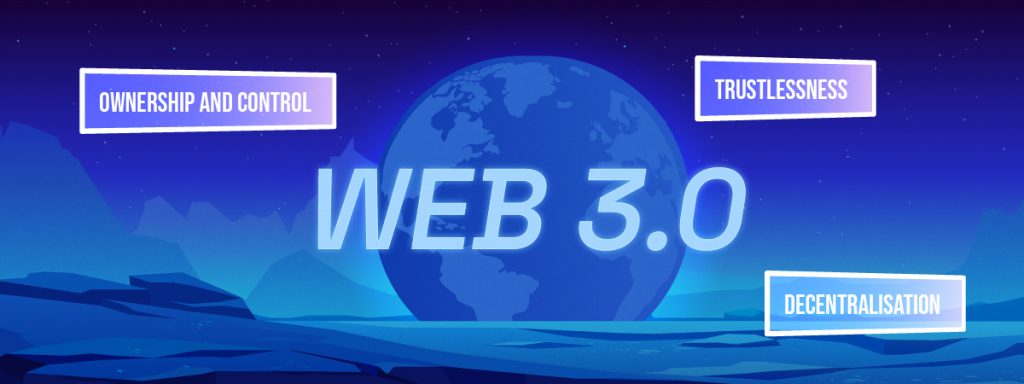
As mentioned above, there are some key ideas around which Web3 has been created. These include:
- Trustlessness: Web3 does not rely on trust between users or institutions. Instead, it uses cryptographic algorithms and smart contracts to ensure security and transparency. Through the use of these technologies, Web3 eliminates the need for intermediaries and creates a trustless environment where transactions can be conducted with confidence.
- Ownership and control: With Web3, users have greater ownership and control over their data and digital identities. Your data is no longer controlled by large corporations. Instead, you have the ability to decide how your data is used and shared, providing you with greater autonomy and privacy.
- Decentralisation: Web3 is built on the decentralized nature of blockchains. It cannot be controlled by monopolies or central authorities. This decentralization promotes a more democratic and inclusive internet, where power is distributed among network participants. By removing the reliance on a central authority, Web3 reduces the risk of censorship, manipulation, and abuse of power.
Features of the Web3 Ecosystem
Some of the essential elements of a Web3 ecosystem include:
- Blockchains: Distributed ledgers that store data across a network of computers. They allow for transactions to be recorded and stored transparently for all users to access. Blockchain technology provides the foundation for the decentralized and secure nature of Web3.
- Smart Contracts: Self-executing code that enables contracts to function automatically. Smart contracts make the ecosystem more efficient and allow developers to create unique automated features. They eliminate the need for intermediaries in contractual agreements, ensuring transparency and reducing costs.
- Digital Assets: The use of crypto tokens and NFTs is essential to Web3. It allows for financial transactions to be independent of governments and banks, which makes the system decentralized. Digital assets can represent ownership, identity, or other valuable items, and they enable new business models and economic systems within the Web3 ecosystem.
- Interoperability: A major issue with blockchains and assets today is that they are locked into their own ecosystems. Web3 aims to create a unified ecosystem where all blockchains can connect and share assets with each other. Interoperability ensures that different platforms and applications can seamlessly interact, fostering collaboration and expanding possibilities within the Web3 landscape.
Read more: Guide to Taking Your Organization from Web2 to Web3
What is the Difference Between Web1, Web2, and Web3?
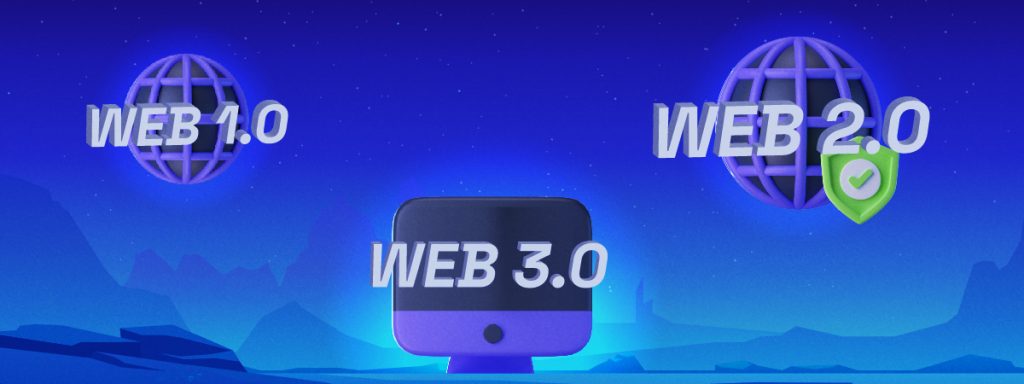
| Feature | Web1 | Web2 | Web3 |
| User Engagement | Read-only. There was no concept of user pages or comments on a page | Read-write. It introduced a social element to the web by allowing users to share data | Read-write-own. Any data you share on the web is also owned by you |
| Technologies Used | Server architecture and static pages | Javascript, HTML, and CSS | Artificial intelligence, machine learning, and blockchains |
| Control | Website owners | Tech monopolies | Decentralized, user-owned |
| Goal | Sharing Information | Web Interaction | Web Immersion |
| Examples | MySpace, LiveJournal | Instagram, Amazon | Brave Browser, the Metaverse |
What is the Future of Web3?
Web3 is still in its early stages of development, and while real-world adoption is currently limited, the momentum behind Web3 technology continues to grow at a rapid pace. As the demand for decentralized systems, digital ownership, and trustless transactions increases, the role of Web3 blockchain networks and Web3 crypto assets is becoming more prominent across industries. From finance and gaming to identity management and content creation, use cases are steadily expanding, signalling that Web3 is moving beyond experimentation toward broader real-world relevance.
Looking at the broader history of the web, the transition from Web1 to Web2 did not happen overnight—and the same gradual evolution is now unfolding between Web2 and Web3. In the near term, the future of Web3 is likely to take shape through its integration with the existing internet. This hybrid phase, often referred to as Web2.5, blends the decentralization and ownership principles of Web3 technology with the scalability and user-friendliness of today’s platforms. By bridging the gap between centralized and decentralized systems, Web2.5 enables a smoother transition toward a more open, transparent, and user-driven internet powered by Web3 blockchain and Web3 crypto innovation.
Read more: Future of Web3 in Ecommerce
Are Blockchain and Web3 the Same?
Although blockchain and Web3 are often mentioned together, they are not the same. Web3 technology represents the next phase in the history of the web, focused on data ownership, transparency, and a smarter digital experience. In contrast, Web3 blockchain acts as the foundational layer that enables decentralization, while Web3 crypto powers transactions within this ecosystem. Together, these elements make Web3 secure, transparent, and trustless—but each plays a distinct role.
Conclusion
Web3 marks the next phase in the history of the web, promising a more transparent, decentralized, and user-empowered internet experience. Powered by Web3 blockchain, smart contracts, and Web3 crypto, this new era of Web3 technology enables stronger security, digital ownership, and trustless transactions. While Web3 is still evolving, its long-term potential is immense, positioning it as a transformative force in shaping the future of the internet.
In the grand scheme of things, ZebPay blogs are here to provide you with crypto wisdom. Get started today and join 6 million+ registered users to explore endless features on ZebPay!
FAQ on Web3
How does Web3 differ from Web2?
Web3 differs from Web2 in several key aspects. While Web2 focused on user-generated content and social interactions, Web3 takes it a step further by introducing decentralization, trustlessness, and user ownership. In Web3, users have greater control over their data and digital identities, and transactions can be conducted without the need for intermediaries. Additionally, Web3 utilizes blockchain technology, smart contracts, and digital assets to create a more transparent and secure online environment.
What are the key technologies driving Web3?
Web3 is driven by several key technologies, including blockchain, smart contracts, and decentralized applications (dApps). Blockchain technology provides the foundation for decentralization and transparency, allowing for secure and tamper-proof data storage. Smart contracts automate agreements and transactions, eliminating the need for intermediaries and increasing efficiency. dApps are decentralized applications that run on the blockchain, ensuring transparency, accountability, and resistance to censorship.
What is an NFT in Web3?
NFT stands for Non-Fungible Token and is a unique digital asset that represents ownership or proof of authenticity for a specific item or piece of content. In Web3, NFTs play a crucial role in the ownership and exchange of digital assets, such as art, collectibles, music, and virtual real estate. NFTs are built on blockchain technology, making them scarce, indivisible, and easily verifiable. They enable creators and artists to monetize their work directly, bypassing traditional intermediaries.
How will Web3 impact the entertainment and media industries?
Web3 is expected to have a profound impact on the entertainment and media industries. With Web3, content creators can have greater control over their work and directly monetize their creations through NFTs and decentralized platforms. This enables new business models, such as tokenized ownership, royalty distribution, and crowdfunding. Additionally, Web3 allows for more transparent and secure distribution of content, reducing piracy and ensuring that artists receive fair compensation for their work.
What role will blockchain technology play in the development of Web3?
Blockchain technology plays a central role in the development of Web3. It provides the underlying infrastructure for decentralized and transparent systems. By using blockchain, Web3 ensures immutability, security, and consensus without the need for a central authority. Blockchain enables trustless transactions, enables the creation of digital assets, and facilitates the execution of smart contracts. It also allows for the recording and storage of data in a distributed manner, making it resistant to tampering and censorship.
How will Web3 affect online privacy and data security?
Web3 aims to address the issues of online privacy and data security that are prevalent in Web2. With Web3, users have greater ownership and control over their data. They can choose what information to share, who to share it with, and how it’s used. The decentralized nature of Web3, powered by blockchain technology, ensures that data is stored in a distributed manner, making it less vulnerable to breaches and unauthorized access. Additionally, transactions conducted on Web3 are secured through cryptographic algorithms and smart contracts, enhancing overall data security and privacy.